• Sari la conținut

BobbyVoicu.ro

  • Home
  • Arhiva (2005-2013)
  • Home
  • Arhiva (2005-2013)

Arhiva completă

  • Toate
  • Română
  • English

Which entrepreneur made tractors before entering the sports car business?

ENîn engleză Entrepreneurship, Misc · May 6, 2020

Well, if I tell you the first name of the entrepreneur, it might not ring a bell: Ferruccio.

If I tell you it’s a car company, you might think: “Hmmm, italian name… Ferrari! Ah, no, that’s Enzo! Alfa Romeo! Maserati!”.

Or you might say the right name: Lamborghini.

Which entrepreneur made tractors before entering the sports car business?

Yes, Lamborghini, the supercar company owned now by Volkswagen, initially made tractors. And they still do, they’re called Lamborghini Trattori.

But what made a tractor manufacturer start a supercar company? Well, spite. Maybe that’s where Larry David got his “spite store” idea for “Curb Your Enthusiasm”.

Fast Cars Passion

As an entrepreneur, Lamborghini was a successful one, owing it to his tractors. But he was also passionate about cars, especially really fast ones.

He owned Maseratis, but he didn’t like them because he felt they were too heavy. Then he owned some Ferraris, but he was constantly annoyed by the low quality of the pieces they used (especially, apparently, the clutch).

Spite and Personal Need

This is where spite comes up. He went to Ferrari’s owner, Enzo Ferrari, and complained. The proud Enzo, though, dismissed his issues. So Lamborghini started to think he could create a really good Grand Tourer car.

Gap in the Market

While he was passionate about his cars and he probably didn’t love Enzo Ferrari too much, he also saw a gap in the market: a really good super car, with no technical issues. Or at least less visits to the service after you buy it.

Competitive advantage

He also saw his own competitive advantage: because he already produced the tractors, he could adapt pieces from there and create a cheaper car. Companies like Ferrari would buy them more expensive because Lamborghini could buy in bulk. He was probably making a whole lot more tractors than Ferrari and Maserati were making cars so he had this particular advantage.

There’s a lot more to Lamborghini’s history and you can read more on Wikipedia or in this book. We also have Lamborghini Urraco and the V8’s: Urraco, Bravo, Silhouette, Athon, Jalpa in our database of book recommendations, if you prefer reading books.

Is Saturday a Business Day?

ENîn engleză Misc · May 7, 2020

Sounds funny, right?

“Is Saturday a business day?”

Short answer: No, for some. Yes, for some others.

Even shorter answer: if you’re an entrepreneur, YES, Saturday is a business day!

Now the longer version and explanations.

I was born in communist Romania. For the first almost 5 years of school, until the fall of the communism, I went to school on Saturdays. Granted, they were “short” days (we had just half of the normal week day hours), but we still went to school on Saturdays.

Back to present day, most of my entrepreneur friends also work on Saturdays. They might not go to the office, but they work on Saturdays. Well, if you are an entrepreneur, do you ever really “leave” your job?

There is a real reason, though, why people would ask themselves if Saturday is a business day. And it usually has to do with working with government or financial institutions (banks, mainly).

In my experience, most of them don’t work on Saturdays. They might have an office or two that are open on Saturdays, but you need to call ahead or look online for their schedules.

Here are some areas where people generally DON’T work on Saturdays:

– government offices
– financial institutions
– lawyer offices
– notary offices

I’m sure there are more, but these are the ones most people want to know about.

If you really want to know what a business day is, here’s a Wikipedia link.

Image source: Canva.

How to Validate a Software/App Idea with Less than $200: A Case Study of MavenHut's Solitaire Arena

ENîn engleză Entrepreneurship, Startup Founder · May 12, 2020

Do you really need a product to show when you start a new business?

The truth is you can actually start a business without a product. You need to know if there is a market for your idea, though. How do you do this? Asking friends and family is a dumb idea, in my opinion, so you need to find another option.

Read below how we’ve done it at MavenHut, before writing even one line of code. This happened in 2012, but the tactics and strategies mentioned in the post below are still valid.

A lot of people talk about Dropbox’s launch: they had a video, put it on youtube, got 75,000 people signed-up on the waiting list and so on. Of course, by that time Dropbox was a Y Combinator company, a year old company, for that matter, so this might have helped a little bit (more).

How to Validate a Software/App Idea with Less than $200

Use a mock product site

Here’s how we did it at MavenHut: In February 2012 we’d just gotten accepted into Startup Bootcamp Dublin on the perceived strength of the team, mostly, and not because we had some amazing product (read about MavenHut’s 1st year here). We’ve have had some idea of what we wanted to do, but it was fuzzy, to say the least. So, the first thing to do: we needed to confirm that taking classic games and making them multiplayer was a good thing. Take into consideration that most classic games are single player (Solitaire, Tetris, Minesweeper, Asteroids, Space Invaders aso), so the question we asked ourselves was genuine and needed a real answer.

After some analysis, we decided on Solitaire to be the test game. But we wanted to know if people would actually want to play such a game. And I considered that we needed to have the potential users take some sort of action, not only tell us “Yes, I would play this kind of Solitaire!”. As Ford would put it: “If I had asked people what they wanted, they would have said faster horses.” (though the quote is not sure to be real).

I would rather have some action from potential users, rather than have them tell me what they think they want.

What we did, in short:

I bought a domain name (solitairewithyourfriends.com – not live anymore, but you can see some it on archive.org, here).

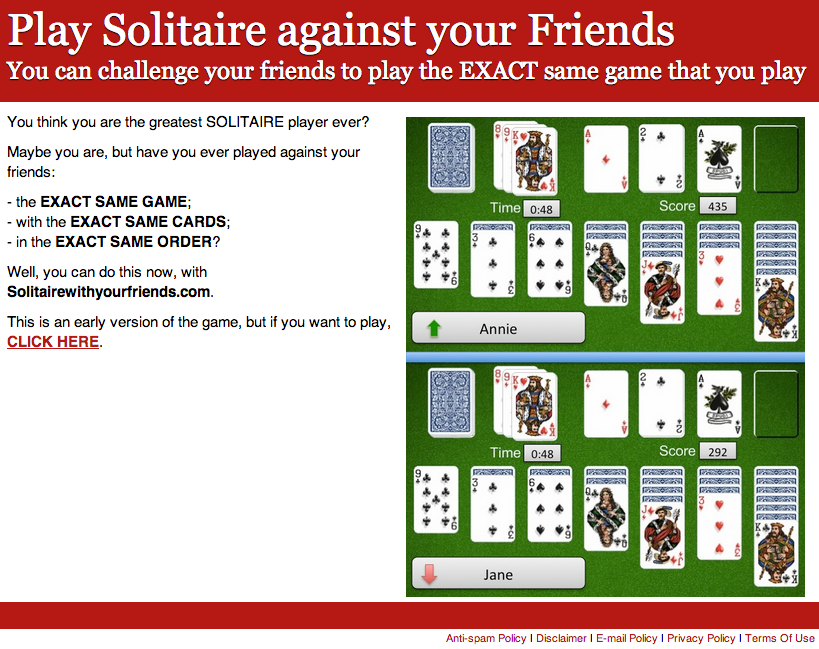
I installed Wordpress on the domain, using some cheap hosting. I am graphically challenged so I just chose the simplest theme possible and I wrote one post. The text on it was, basically, telling people that we work on a great version of Solitaire, but it’s not available yet, though you can play the old version. Also, we had a Photoshopped screenshot of how it would look (which I didn’t do).

The most important thing in the entire page was the fact that we had a link to an “old version” of the same game. And you “could” play that if you really wanted a multiplayer solitaire. The thing is that game never existed. We lied a little bit, but this way we had people perform an action and that told us that they were interested (or, at least, curious).

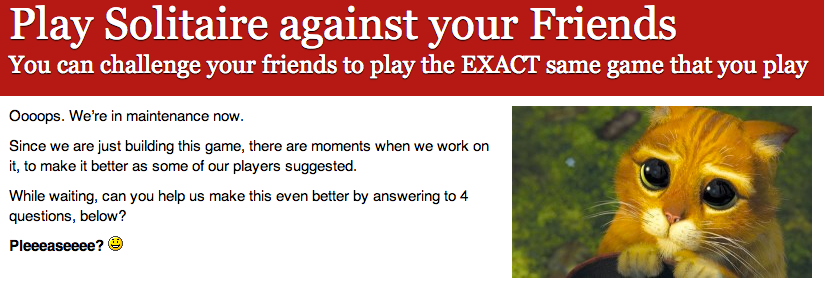
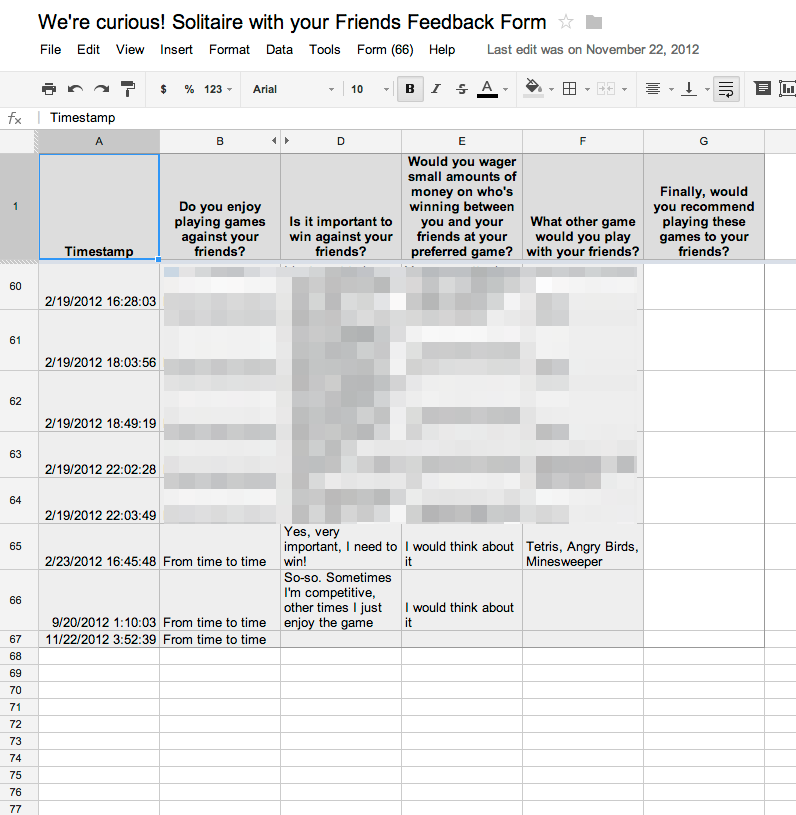
On the second page, though, people couldn’t play the early version of the game, since we were “just doing some maintenance on it”, but we asked them to complete some form, to give us some information. We thought nobody would do it, but we were pleasantly surprised (numbers below). In the form, in just 4 questions, we asked some info on multiplayer and classic games.

Finally, after building the site, I’ve deployed some Facebook ads and 3 days and $160 later, we had some answers.

So, this is, in short, the story.

Now, some numbers.

1. You don’t need an expensive site

Building the site, from the moment I bought the domain name to the moment it was live, took me about 4 hours (I am in no way proficient with Wordpress or graphics). It cost me $12 in the domain name from NameCheap (today, I recommend Hover.com), and I already had some hosting on BlueHost, but I assume you can use any host. I would suggest, though, one that has any type of quick Wordpress installer, since it makes it really simple to install Wordpress. You can find hosting packages for about $3/month for monthly payments (and, for a test, you don’t need more than that). As an idea, for The CEO Library I use WPX Hosting, which is the best managed Wordpress hosting I’ve used, but it’s a lot more expensive (because of the support it offers, the options and so on). The thing is, for a fast test, you can really use almost any cheap hosting you have access to, like Bluehost.

Wordpress is the blogging CMS that’s really easy to install, has lots of features, lots of themes to pick from aso. I used ThemeForest to buy premium themes, so I would suggest them. Still, even better, I would choose a free theme, and you can find plenty on the web, starting with the Wordpress themes repository.

2. Make the content on the site interesting and engaging for you target audience

Since we targeted people that played games, I used a more tongue in cheek tone, having fun at our own expense, lowering the initial rejection reaction that people would have for being tricked into getting on a page that promised them an interesting game. Also, a screenshot of what you offer (or promise to offer) them goes a long way, showing that you are actually trying to provide what you said (see the screenshot above with our frontpage). You can make good looking images with Canva, it’s an amazing and fast tool (even I can create them).

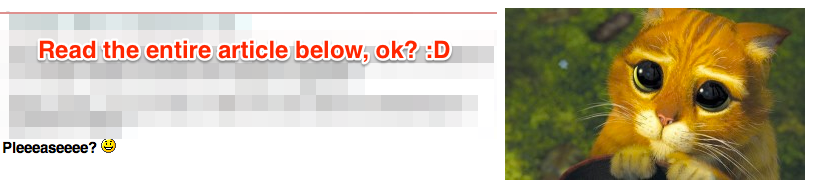
On the second page we continued with the same attitude, but this time we had to push the “saying sorry” theme since it was a second time we actually tricked the players. So we used the “can’t resist” eyes of Puss in Boots from Shrek and asked to be forgiven. This allowed us to be more cheeky, actually, and also ask for their help with the form: “Pleeeaseeee?”.

3. Users should take some kind of action

The Click here on the first page was the action we were very interested in. And everything on the page drives people to click that. We thought that if they do click (they do some action), they are really interested or curious about what we want to offer (a multiplayer Solitaire). On the same page, you could also click on the Photoshopped image of how the game would look like.

Moreover, on the second page, since we knew we would lose those users anyway (nothing else to do on the site), we added a Google Form (free with Google Docs, puts results in a sheet, best choice in my opinion for something fast and short). In the form we chose to give them just 4 questions – initially 5, because I wanted the “submit form” button to be visible without scroll. The question can be anything you need, we needed some game ideas suggestions from the potential players.

To give you the context, the first iteration of MavenHut was a platform for real money betting on single player games (hence, the third question, about betting).

Finally, a lot of people asked why we didn’t ask for the email addresses. Well, we wanted as many answers as possible in the shortest amount of time and I’ve found out that people become more evasive once they give any type of identification, even email. Moreover, since it was a small test, the list would be really short. Building an email list is a good thing to do, but not in this particular case.

Actually, why don’t you subscribe The CEO Library’s email list. I’m sending a weekly email with tactics for startup growth, books to read, as well as a list of interesting startup and business articles from around the web.

4. Drive some targeted traffic to the page

This is what a lot of people find difficult.

First of all, you need to decide how much is enough: how many visitors, how many clicks, how many answers. We decided that about 200 visitors should be enough to give us an idea of the appeal of Solitaire multiplayer. More, we were really bootstrapped at that point so we wanted to spend the least amount of money possible.

There are two ways to send traffic: free and paid.

Free traffic means going to sites like HackerNews and use AskHN (I think reddit also has a similar section) if your audience is there, go to forums where your audience stays or, if you can, find a blogger to ask his/her audience. The downside of the free traffic is that it takes time to generate it.

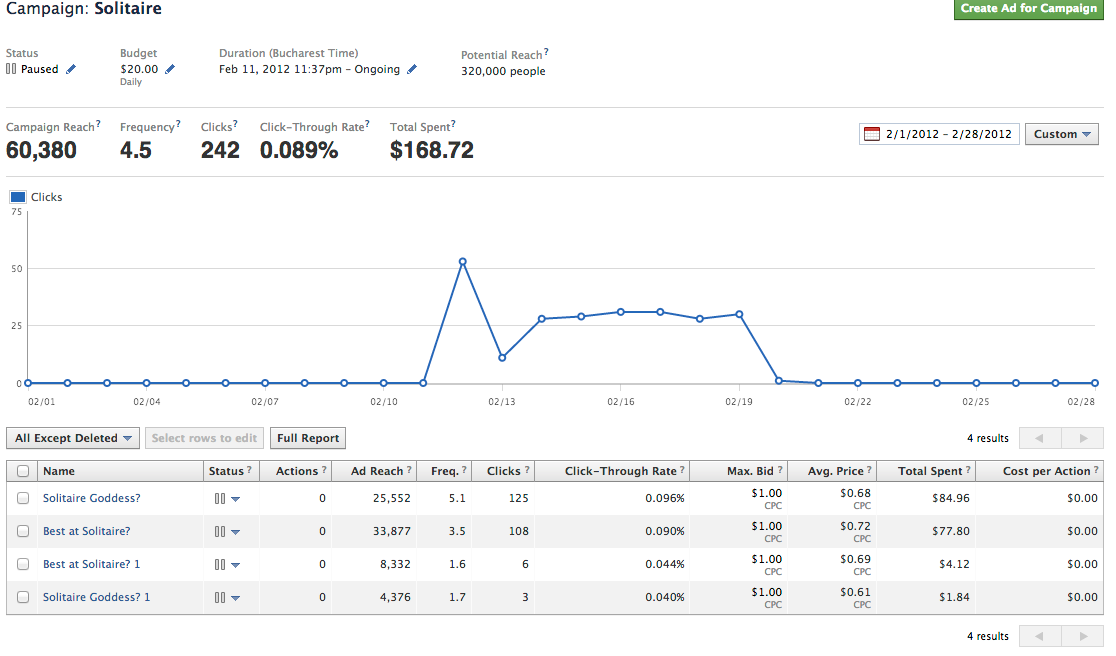
Paid traffic means everything from Google Adwords to Facebook Ads. We chose Facebook Ads because we already knew we would launch the first game on Facebook (my co-founders had a lot of experience on the platform), so Facebook Ads was the choice. Moreover, you could target specific audiences, from location and age to, what mattered most for us, interests.

We’ve got some interesting results:

Click on the image for a bigger version

As audience, we chose Solitaire as interest and US as country.

Finally, we sent these users to our site, but we needed to follow them in the site and extract some info.

5. Metrics: the most important thing

First and foremost, you need to understand what indicators you want to follow. From the start, our KPIs were:

– how many people reach the site from Facebook Ads (is there any interest in this type of games?)
– how many people click on the first link on the site (Click Here and the image) – this would give us information on the level of interest for this kind of game
– how many people complete the form (self-explaining)
– how much time people spent on the site, especially on the second page (it means they were interested enough to read what we wrote)

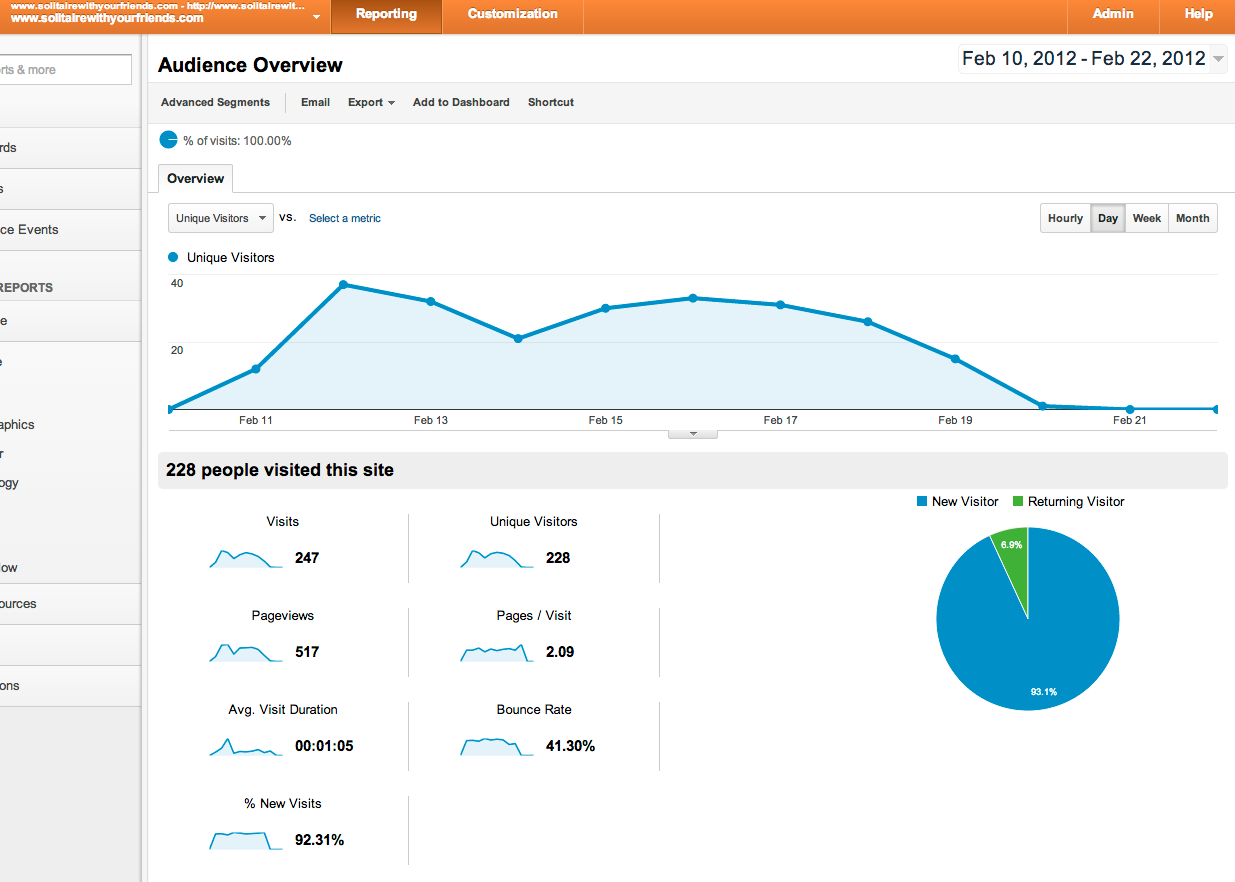
All these numbers were available through Google Analytics, the free solution from Google, which we happily installed.

Click on the image for a bigger version

The results? Well, above expectations:
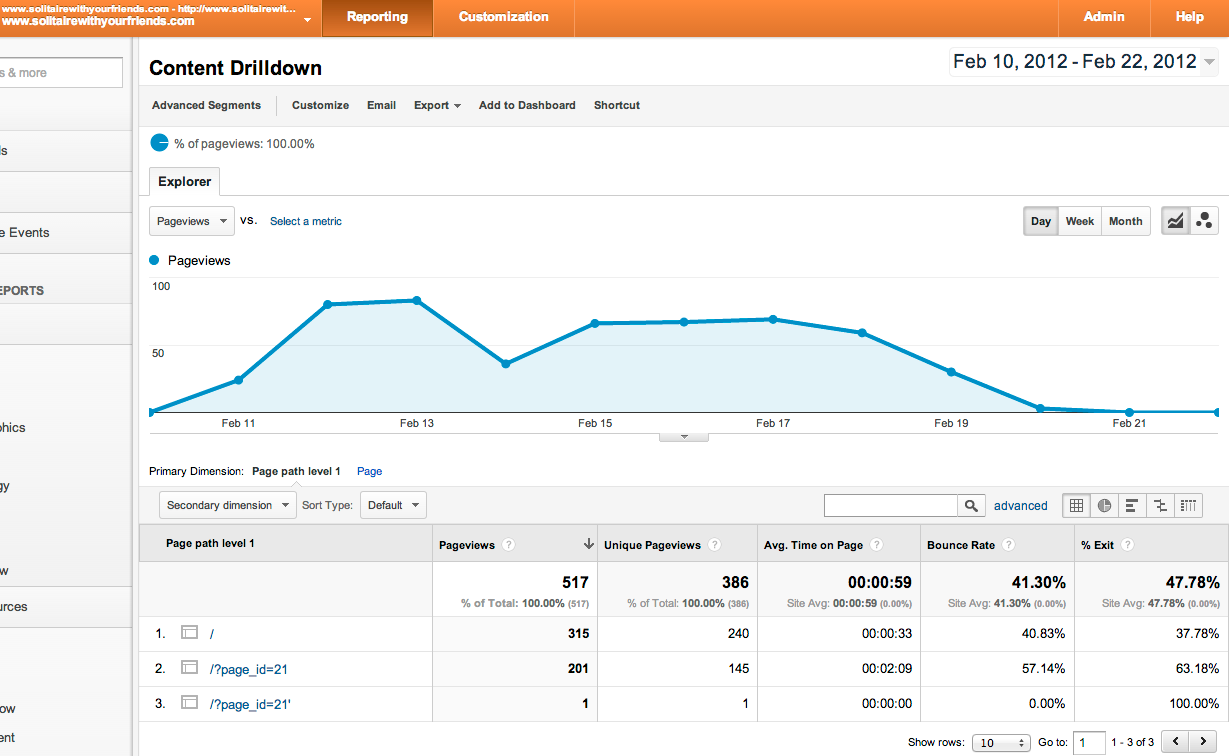
228 unique visitors, 517 page views, 386 unique page views, 145 pageviews on the second page (the one with the form), 2:09 minutes on the second page.

Click on the image for a bigger version

The percentage of people visiting the second page is 60% (145 unique pageviews compared to 240). This means 60% of the unique visitors (approximately, since we cannot compare unique visitors on the pages, but we expect people didn’t visit the second-page multiple times) clicked on “Click Here”. So 136 people visited our second page. Out of those, 66 people submitted the form to us. A staggering, for me, 48% of the people that got on the second page (and 29% of the total visitors).

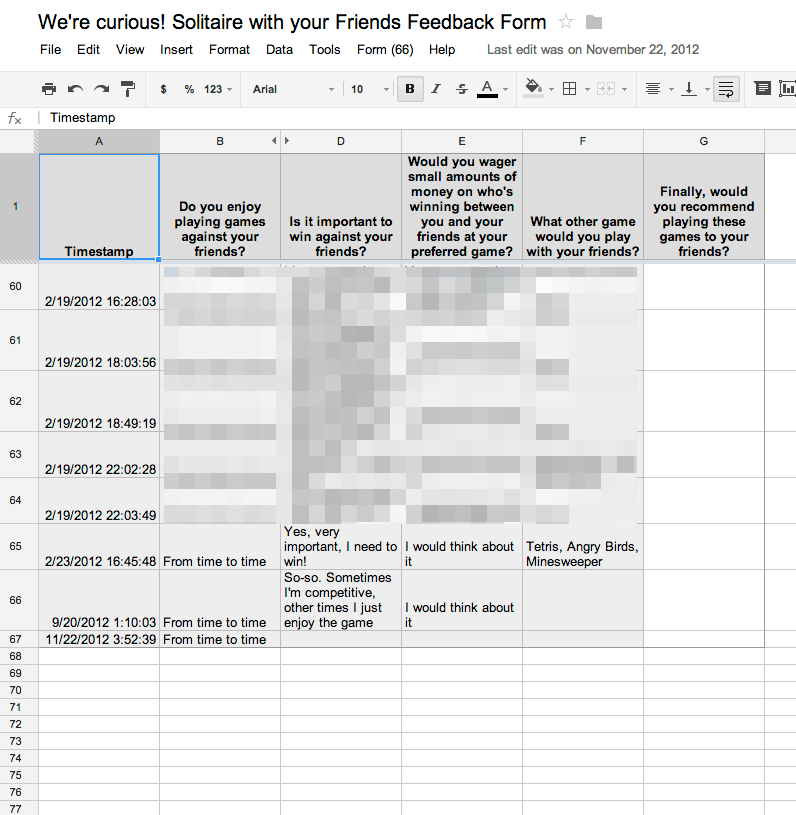
The answers? Well, those are for us to have, aren’t they? :) There are two of them in the screenshot below (the same as the one above).

The results of this experiment gave us the push to start building Solitaire Arena. And it gave us first proof of concept.

I am amazed at how many startup founders don’t do this kind of testing (especially seeing how cheap it can be – it cost us less than $200), but I think most of them don’t do it just because they are afraid of the answers. We were quite ready to change course (which we did, we never built a gambling platform, as we initially intended).

Finally, where does the story end?

Well, we presented some great numbers at the Demo Day of the accelerator: see our Demo Day presentation here.

Solitaire Arena had, a year after launch, 1,500,000 monthly active users, MavenHut has been the recipient of $700,000 in investment and it has outgrown the 3 initial co-founders several times.

In 2015 we sold most of the games to RockYou, an US company. MavenHut’s games were downloaded more than 40,000,000 times across all platforms available. And in 2016 I left the company :)

P.S.: I wrote the first version of the article in 2016. This is an updated version I wrote in 2020.

What's the biggest startup MVP mistake you can make?

ENîn engleză Misc · May 13, 2020

In the phrase “minimum viable product” (or MVP), the keyword is MINIMUM. And there’s your biggest mistake.

First of all, if you don’t that what’s an MVP, see here.

If you want to watch, rather than read, there’s a video at the end of this post. For more similar videos, subscribe to the YouTube channel.

What’s the biggest mistake you can make related to building your MVP (Minimum Viable Product)?

The biggest mistake that people make when it comes to their MVP is doing more than you need to do.

Building an MVP means building the least amount of features that get you the information you need from the market (that your product is necessary).

But our mistake, as startup founders and product creators, is thinking that the least amount of features necessary for something to be the MVP is actually a lot more than what you really need.

Think about this: Dropbox had an email form explaining what their product will do. That’s it. And they had 75,000 people waiting to test their first version.

So, let’s say we’re building a website for pet owners. The MVP should be a form where some owners can put their details and they get the information they need. Even if that means you do the manual job of finding the information for them.

The mistake would be to build an entire website, with a great design or with any kind of design, and put it online and take the time to create a logo and take the time to think really well about the name.

You don’t need that in order for you to test the idea. You just need the form and the information you provide and you need to get some users to use that MVP to see if the idea that you have is actually good for the targeted audience.

Do not over-complicate things: this is the biggest mistake you can make when it comes to the minimum viable product for a startup.

Or, as Paul Graham put it: during the MVP phase, you must do things that don’t scale.

For more similar videos, subscribe to the YouTube channel.

Worldometers.info Gets 1 Billion Visits in April 2020

ENîn engleză Misc · May 19, 2020

With all the pressure put on the business environment by the quarantine we’ve been into, due to COVID-19, there are some businesses, though, that saw amazing growth.

Still, a statistics site wouldn’t have been one I would’ve thought about before the pandemic. But Worldometers.info saw a growth to 1 billion visits in April. And not even that, but 70% of those visits are now direct. This, compared to 80% of the visits being from Google prior to February 2020.

If you make a “back of napkin” calculation, you see that they generated a revenue of at least $1M just in April 2020.

That’s not bad for a statistics website, right?

By the numbers: Worldometers.info was the #28 most-trafficked website worldwide this month, according to data and analysis from SimilarWeb.

That’s up 20.6% in traffic from March and up 36,928% from April 2019.

More details here.

Of course, this is not the only site with COVID related numbers that made the news recently.

A 17 year old student made a coronavirus tracking website, as well, and he refused $8,000,000 to allow ads on it. As opposed to worldometers, which already existed and had ads on it, nCoV2019.live doesn’t make money and, apparently, doesn’t intend to.

The dashboard is really popular, with about 30 million visitors a day, and 700 million total so far, so it’s unsurprising that Schiffmann has gotten offers to put ads on the website. One offer in particular would have contracted Schiffmann to keep up the site for $8 million, which he turned down, and he says he likely could have made over $30 million if he’d put up his own ads, but he says that’s not the goal of the site.

More details here.

Big Deal: Joe Rogan's Podcast on Spotify Only

ENîn engleză Misc · May 20, 2020

This is a big move for Spotify. In some ways it’s like the huge content deals sites like Netflix, HBO, Disney+ and Apple TV+ did when they launched their projects. And I feel that financially is in the same ballpark.

This is how it looks in numbers. Joe Rogan’s Podcast has:

  • 190 million listeners per month (in April 2019, at least). If the link doesn’t open at the right time stamp, go to minute 4:48 in the clip.
  • 8.4 million subscribers for Powerful JRE YouTube channel
  • 4.46 million subscribers for JRE Clips Youtube channel
  • revenues of $30 million in 2019

I mean, he’s doing pretty well on his own, personal, distribution channels. It probably took a lot of money and opportunities to move his podcast to what is, essentially, a closed system. Yes, the podcast will be free, but you still have to be a Spotify user, which didn’t happen before.

Rogan’s YouTube channel will remain live, but it won’t contain full episodes. There might be clips or other supplementary content which could benefit from YouTube’s search algorithm and push people to listen to full episodes on Spotify.

From TheVerge

As a side note, I don’t like Spotify as a podcast player. I use Overcast and I find it better for that. I do use Spotify for music and I find it has the best suggestion engine, but I’ve been testing YouTube Music lately, as well.

Going back to this deal. I feel that it can be a turning point in the world of podcasting. The straw that brakes the camel’s back and moves a lot of podcasts (and podcasters) to closed platforms. I don’t love it, frankly, but who knows.

On the other hand, I rarely listen to Joe Rogan’s podcast and, when I do, I usually go to YouTube. So it might not be a sign for the industry at large. Anyway, interesting to follow where it goes, since it can be a first sign for things to come for “freelance creators”.

Image made in 2 minutes with Canva

Most Difficult Questions I Answered During an Investment Pitch

ENîn engleză Misc · May 28, 2020

Oddly enough, I found it really difficult to explain to other people just what Mavenhut did. :)

What was the most difficult question I got during a pitch?

The truth is, there are no easy questions during a pitch, especially when you don’t know the answer.

As a consequence, the most difficult questions I got during a pitch were the ones I didn’t know the answers to.

The thing is, as you go from pitch to pitch, you shouldn’t have issues with the previous difficult questions, because from one pitch to the other, you should know the answers.

A difficult question I received during raising money from Mavenhut was:

What does Mavenhut do?

And I wasn’t really able to explain in a concise way what Mavenhut does and it took me about one or two days to formulate the answer in a way that people would understand.

Since Mavenhut built Solitaire games, one of the questions was:

Do you really think that people would buy an application that’s already free on their computer?

And it took us a little bit of time to find a way to explain why people would spend money on an application that’s already free in their computer.

Another question I got was:

Are you really going to spend 80% of the seed money that we give you on advertising?

And, actually, the answer is simple: it’s “yes”. Explaining it is not as easy so it took us a little bit of time to find a way to explain why gaming companies use so much of their investment on advertising. All I had to do was explain the “Unit Economics: of our users aaaand… it was ok :)

There are no difficult questions; there are just questions that you don’t know the answer. Yet.

.

From pitch to pitch, the “difficult questions” should change; you should have different difficult questions and, in time, there shouldn’t be any.

For more similar videos, subscribe to the YouTube channel.

The Last of Us, Part 2, State of Play

ENîn engleză Games I Play, Misc · May 28, 2020


The reason I got my first PlayStation ever (it was a PS3) was to play Uncharted 2, one of Naughty Dog’s games.

I loved The Last of Us Part 1.

Last of Us part 2 should have been available for play these days. It was moved up until June 18th, so there’s not a long time to wait, but I can hardly do it :)

Yesterday, in competition with SpaceX’s first launch with humans on board (it was postponed), Sony showed some more backstory for the Last of US part 2 and some more gameplay.

If you want to see it, here it is:

P.S.: I also preordered The Collector’s Edition, I hope it still makes it to me in time, before I buy the game on PSN, as well :)

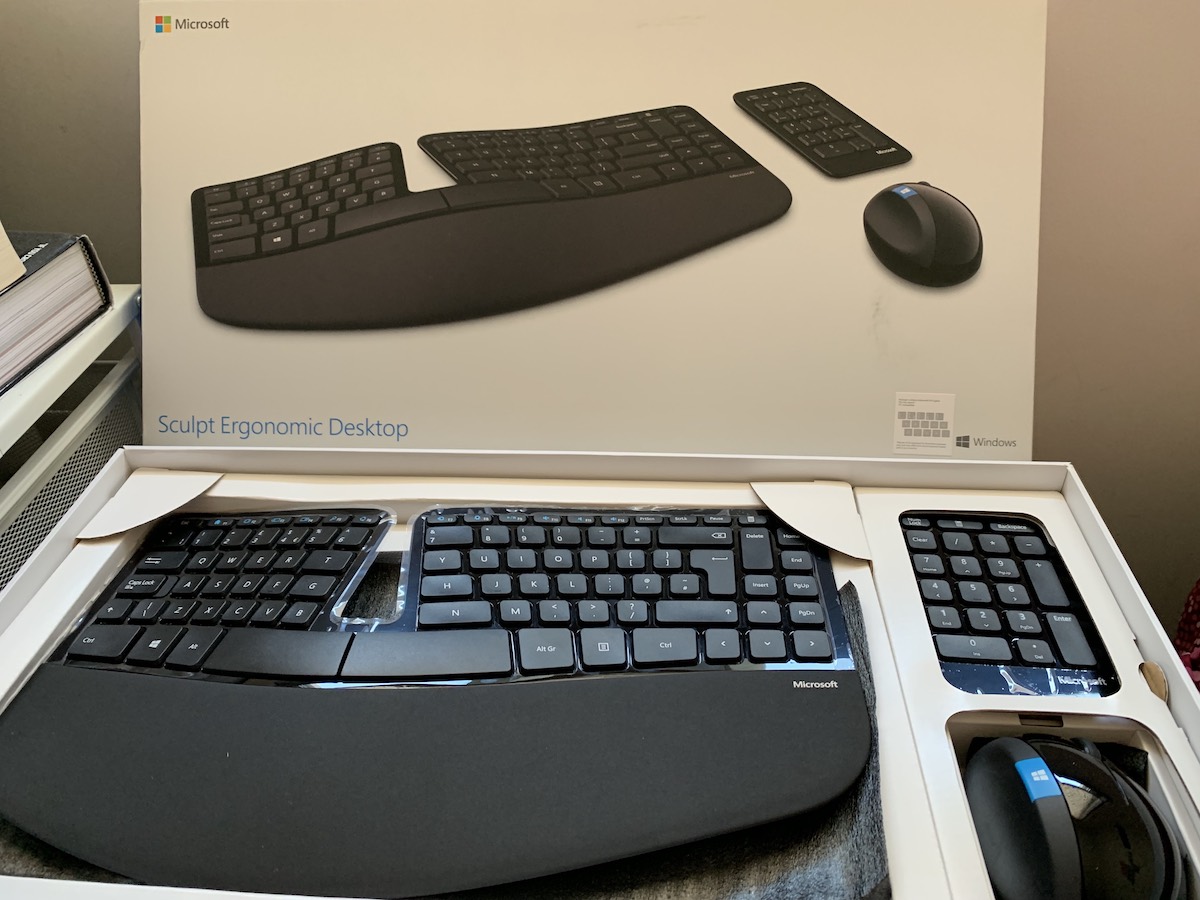
The keyboard I use: Microsoft Sculpt Ergonomic Keyboard

ENîn engleză Misc · June 3, 2020

Some years ago I started to have some issues with my wrist from writing too much (and playing) on the computer. It was an early symptom of RSI and I wanted to tackle the problem as early as possible. I solved some issues by moving my gaming sessions on consoles, but I still needed to sort out writing.

Best Keyboard to Avoid RSI: Microsoft Sculpt Ergonomic Keyboard

While I was searching for a good external keyboard for my laptop (to use while at home, at least), I found this article from Marco Arment. He was really happy with his Microsoft Sculpt Ergonomic keyboard, so I had to try it.

My experience with Microsoft Sculpt keyboard

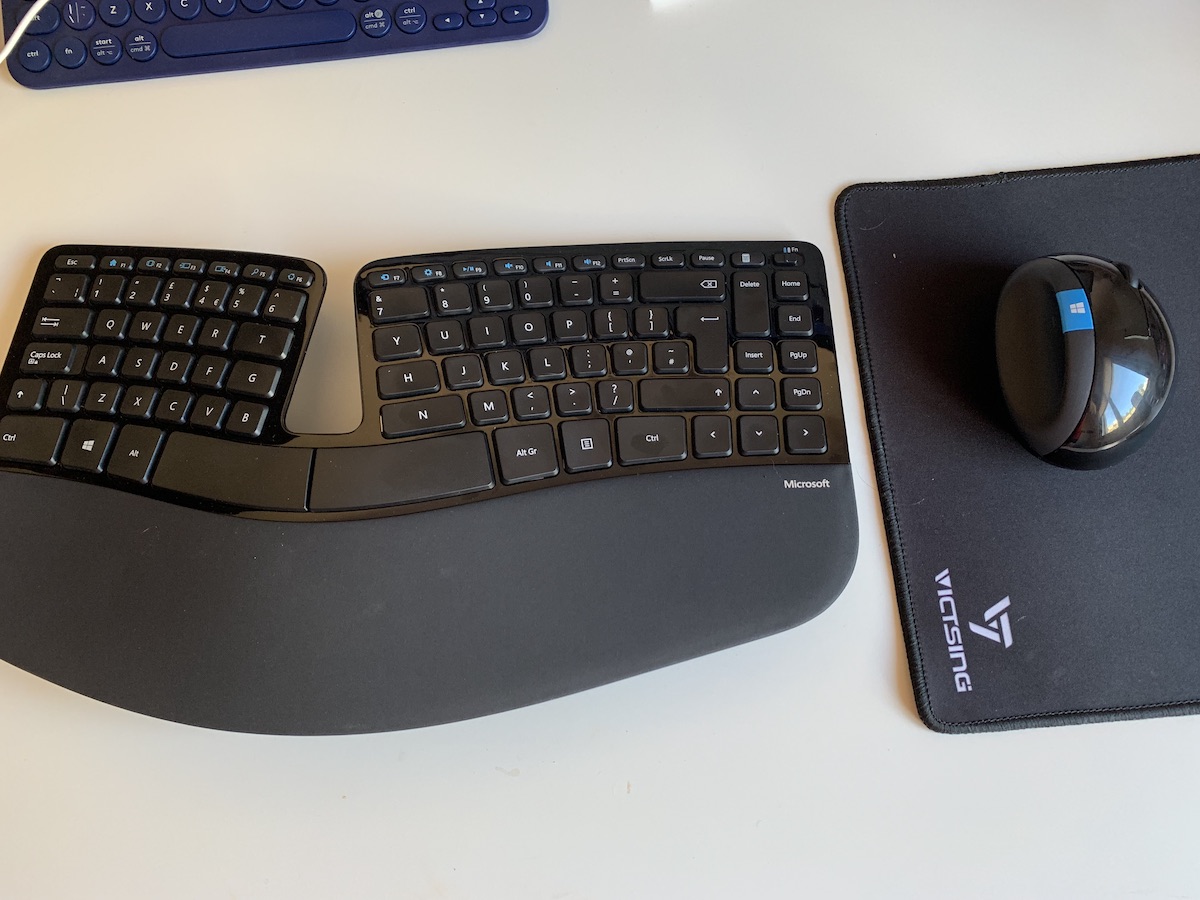
4-5 years later, I just bought my second one. The first one still works quite well, but another member of my family decided she needs it. So here I am, with a new keyboard on my desk, albeit with a UK layout, unfortunately, since I’m really used to the US one. The reason? No Amazon in Europe would sell a US layout Sculpt keyboard. Well… I bought it from Amazon UK.

Later update: in the end, I cracked. I ordered one more expensive (for us, in Europe) from the United States. And my fiancée uses one now, as well. This makes 4 keyboards in total in the last 7 years. And we have one with UK layout in case anything happens.

The shape of the keyboard takes a little bit of time to get used to it. Your writing speed will likely suffer, initially, so you need to put in the effort. The keyboard is basically split in the middle, so if you’re a fast two hands typist, you will adjust pretty fast, but otherwise it might be a little weird.

One thing that makes the keyboard good for RSI prevention is the palm rest. It’s big enough and, more important, it’s higher than the keyboard, so your fingers are, actually, a bit lower than your wrist. This helps a lot, because you’re not forcing your wrist up, as it happens with normal, straight keyboards. The keyboard is also facing downwards on both sides, from the middle, so that you keep the natural position of your wrists during writing.

MacOS solutions: CMD/Option keys

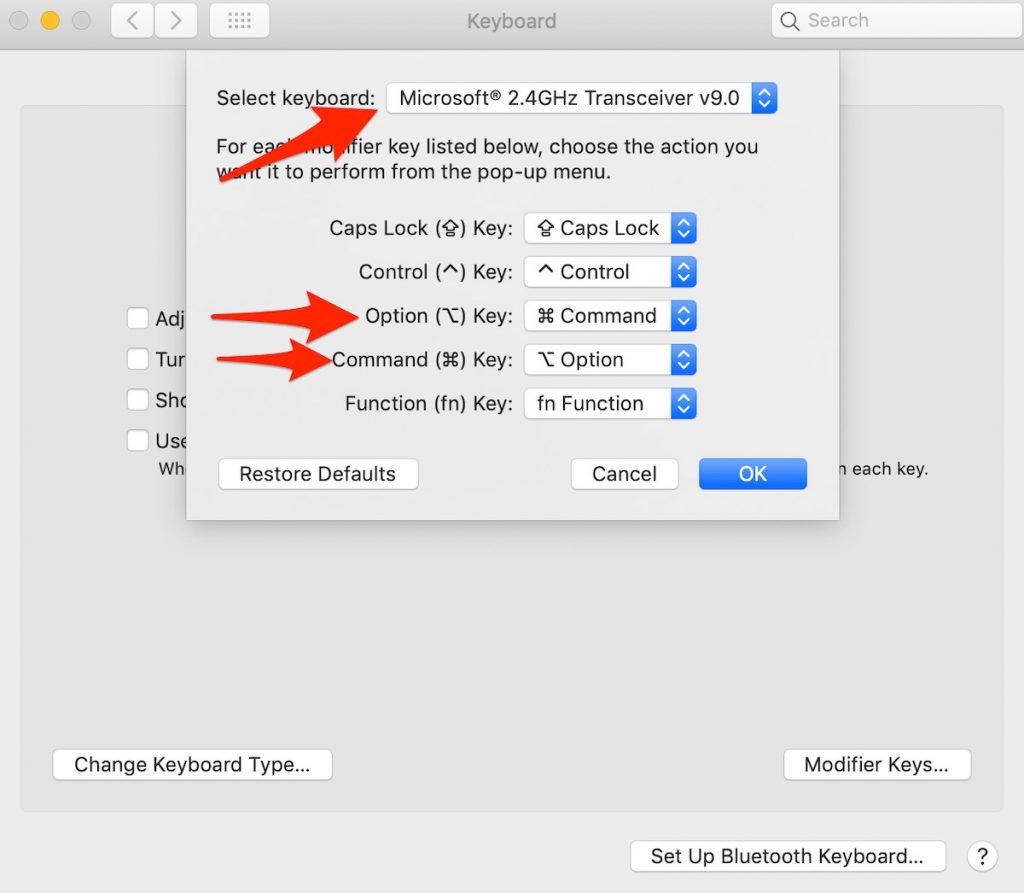
Because I use it on the Mac, I needed to do one change, though. Since CMD and ALT/Option keys on Macs are in different positions than Windows key and Alt on Windows, I switched the keys in System Preferences/Keyboard, as you see below. Now the Alt key on the keyboard is CMD and the Windows key on the keyboard is ALT/Option.

Finally, the mouse. It also helps with RSI, but it’s actually a little bit weirder than the keyboard, if you can believe it: it’s round, like a half of a tennis ball and it actually works quite well. When you use it, your hand stays in its natural position, a little bit on the side, not with the wrist forced in the awkward position to the left (if you’re a righty). Btw, I’ve only seen right hand mice for this keyboard, so keep it in mind.

Weird things about the keyboard

  • it’s not bluetooth, it has a small USB dongle for both keyboard and mouse (and numpad). It is better in some ways, worse in others. YMMV.
  • it doesn’t have a CAPS LOCK led. You never know if it’s on or off. It can be annoying sometimes.
  • the space bar is split. Might feel weird
  • the top row of keys (functions/media keys) are smaller and have a different feel when typing. This includes Escape, which is quite important if you’re coding. It’s not a dealbreaker, you should just know about it
  • the NumPad is separate from the keyboard. I don’t use it, so I’m happy with this solution, because it makes for a smaller footprint on my desk, but your needs might be different.
  • it has a different type of batteries in the mouse than in the keyboard and numpad.

If you want the keyboard, you can find it on Amazon (US, UK, DE), with local layouts. I assume there are other providers, as well, but I didn’t look for them. You can, also, buy just the keyboard, or just the mouse, based on your needs.

Below you can watch a video (not mine) with a review after one year of using the keyboard. It’s not the best image quality, but it’s the best video I’ve seen in terms of an actual user telling you what’s good and not. My experience is a little bit different, since I didn’t have the problem with the rubber strip at the bottom (you’ll see).

Automation is the Name of the Game

ENîn engleză Entrepreneurship, Misc · June 4, 2020

I’ve seen this on TechCrunch today:

Bryter raises $16M for a no-code platform for non-technical people to build enterprise automation apps

2 ideas:

1. I might’ve started too late in life to learn Python to add automations to things in my work life.

Well, what the heck, it’s not like I’ll stop, but it’s good to see no-code platforms growing.

Bryter — a no-code platform based in Berlin that lets workers in departments like accounting, legal, compliance and marketing who do not have any special technical or developer skills build tools like chatbots, trigger automated database and document actions and risk assessors — is today announcing that it has raised $16 million. This is a Series A round and it’s being co-led by Accel and Dawn Capital, with Notion Capital and Chalfen Ventures also participating.

2. Good/Great companies will always find a way to grow/get financing, even during a global pandemic, when people can’t meet face to face.

Michael Grupp, the CEO who co-founded the company with Micha-Manuel Bues and Michael Hübl (pictured below), said that the whole Series A process took no more than a month to initiate and close, an impressive turnaround considering the chilling effect that the COVID-19 health pandemic has had on dealmaking.

You know, when you have a hammer in hand, everything around you is a nail. This is the way I’m seeing automation right now: everywhere I look, there’s some news on automation or something I can automate. I even recommended Zapier as a tool I use in this week’s The CEO Library newsletter.

Image from Canva

  • « Previous Page
  • Pagina 1
  • …
  • Pagina 166
  • Pagina 167
  • Pagina 168
  • Pagina 169
  • Pagina 170
  • …
  • Pagina 185
  • Next Page »

Despre

Scriu. Fara un subiect anume, fara o tema anume.

Aici e o arhiva a perioadei 2005-2013, cand scriam ceva mai des pe blog.

Scrise recent

  • Logo-ul Blanket
  • Elogiu pentru o tastatura: Thinkpad T480
  • Cartile din 2025
  • Bucuria de a fi iritat (si, probabil, iritant)
  • Cum sa iti dai seama la ce esti bun(a)

Proiecte

  • BobbyVoicu.com
  • MixRift

Copyright © 2026 · BobbyVoicu.ro