• Sari la conținut

BobbyVoicu.ro

  • Home
  • Arhiva (2005-2013)
  • Home
  • Arhiva (2005-2013)

Arhiva completă

  • Toate
  • Română
  • English

The delusion of investor supported startups

ENîn engleză Entrepreneurship, Misc · May 12, 2017

I was reading a Reddit thread the other day. A guy was doing an AMA about his startup and had this to say about it:

As a result of this, we are now a pretty rare breed of business as we started with no finance, no VC Funding etc etc, we did it the hard way and are building it the ground up. We use our profits to grow and have no outside help.

Most of the businesses people build are not VC funded or started with huge financing. Most of the businesses are started with some savings and a lot of time put into growing it. I looked for some information on it and I found the infographic here, that gives you a better image of how people finance their own entrepreneurial endeavors.

I didn’t want to point fingers to this guy, though. He’s not the only one that thinks that most entrepreneurial initiatives are heavily funded by outside investors (especially semi-pro and professional investors, like angels and VCs). There are lots of people that think this (at least in the circles I move and read of). And I think we’re a little deluded. And I say “we’re” because I think I’m also heavily biased toward invested startups, as well. After all, MavenHut raised several rounds and this is how it got to be successful.

What’s wrong with the invested startup delusion?

It’s bad thinking that you can’t really start anything if you don’t have outside investment. That all you need is an idea and someone to put $50k-$100k-$500k-$1M in and you’re set, you’re gonna change the world. Because you should focus on doing something and improving your product. Instead, the wanna-be entrepreneur will waste time running after potential investors, “networking” the hell out of all the events in their immediate (and not so immediate) area and, in general, being annoying. Really, have you ever had a guy that never raised a dollar in his life explain to you how to raise money from VCs? Even if you’ve done this several times in the last years? It really gets on your nerves at some point.

Being annoying aside, even more important is that you deprive yourself of a lot of experiences that will generate the great ideas that will help you get a good company off the ground.

And I talk from my own experience: I started doing “business” online in 2005 with no savings or money whatsoever. I was lucky my sister allowed me to stay in a room in her apartment for a while, but that’s all I had going for me. I looked for work on what is now Upwork, this helped me understand SEO, that helped me understand Wordpress, that started me on blogging, that led to a car blog that I wanted to monetize through a racing game that went nowhere. All this took about 6 years. By the beginning of 2012, I started a new project, a platform for 1 vs 1 single player games, with 2 guys that I worked with at the second version of the racing game I told you about. The project would later become Solitaire Arena and MavenHut. Without a doubt, the final result changed my life a lot for the better.

My entire online experience came from starting “something” online without any kind of financing. Yes, MavenHut was eventually financed by a VC and I’m happy for it. I still think starting an investor supported startup should be the natural evolution of your experience with entrepreneurship, not the start of it.

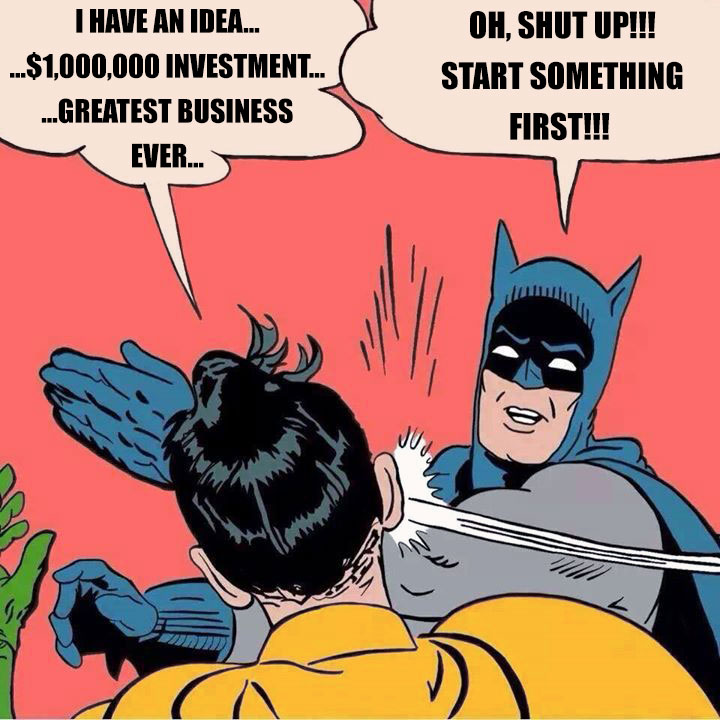
The next time you hear someone saying they just need a “small” investment and they’ll change the world, slap them across the head and send them to ask for investment from their close friends and family (the talked about FFF, the third being fools). If they can’t convince someone that knows them and should trust them, why do they lose time trying to convince someone they don’t know?

Finally, I know this won’t change, people will still dream about the VC fairy instead of just doing something with the resources they have. But if I get to convince at least 1 person to start anything, my job’s done ;)

Oh, and a plug for my Curated Reading List, where I often add articles about bootstrapped businesses. Subscribe and see for yourself.

P.S.: my sister got handsomely remunerated for the “investment” she’s put in more 10 years ago when she gave me and my cat the smallest room in her apartment. The cat didn’t care about rules, he got the entire apartment as hunting ground the next day. I didn’t :)


Thinking of coding

ENîn engleză Learn to program · May 18, 2017

I wrote my first piece of code when I was 6 or 7, I think. My best friend’s father – a Maths teacher – was approved by the Romanian Communist Party to buy a Sinclair ZX Spectrum computer. I remember that between playing games, he showed us how to put our name on the screen (and keep it there indefinitely, until the Scroll? message – or something like this – would appear):

10 PRINT “Bobby”
20 GOTO 10

Having access to a computer in communist Romania was really difficult, to say the least. I was lucky that I found out they existed while I was young enough and that there was a computer club at the “Pioneers’ House” where you could go and learn to program in BASIC (using ZX Spectrum clones that looked like WW1 phones).

Years later, I learned to program in PASCAL, then C. I also dabbled in PHP. Then I started to write content and I started companies. So I stopped programming.

But I miss it. I miss being able to think of something and being able to put together the lines of code to do it. I want to be able to create the MVPs for the ideas I have.

This is why I decided to relearn programming. Following suggestions from some good friends, I chose JavaScript. It allows frontend programming, as well as server side (through node.js) and I can use a wrapper and put the result in the mobile app stores. So, the perfect tool for an early MVP.

I found an applied course of JS and I’m starting from there. It’s nice because you basically follow on-screen examples and I’m better learning through hacking rather than going through the fundamentals first and so on. Another good way to learn is this described here by Derek Sivers. It’s not really for me, though, even if I reached the 6th or 7th chapter of the book he recommends.

What do I want to build? Nothing in particular, but keep an eye here to find out as the ideas come out :)

Oh, I don’t have that much time to dedicate to this, so progress will be slow. But at least there will be some progress, I promise you!

If it's not "Yes", look for a fast "No"

ENîn engleză Entrepreneurship, Startup Founder · May 25, 2017

Fast No, if it's not Yes

The best answer you can get to any business request/proposal is, obviously, “yes!”. But what’s the second best?

For a long time, I thought that I wanted to hear at least a “maybe”. Or “let’s talk later”. Or “if you do this thing, I might be interested”. Oh, boy, how wrong I was.

If it’s not “yes”, the answer you want to hear is a fast “No!”. And don’t be afraid to ask for it, no matter who you’re talking to. Even if, in the short term, you might lose some deals, you’ll earn a lot of time in the long run.

By getting a fast no, you spend less energy on things that are unlikely to succeed. You will not fill your mind with hope even if it’s pretty clear you won’t get what you want.

If you’re raising money, look for a fast “no” if you can’t get to “yes”. If you’re looking for a deal, the same. You’ll be better for it.

Effective or Efficient, Which One Are You?

ENîn engleză Entrepreneurship, Startup Founder · June 2, 2017

Effective vs Efficient

A lot of people pride themselves on being efficient. And this is not bad. Unless you’re efficient about the wrong things. Which means you’re not being effective.

Take this: you have a business selling a hat. And you devise the most efficient marketing plan for selling the hat. But truth is, the hat is bad. SO BAD! And you just spent 3 months creating the best and smoothest marketing plan. And you don’t sell anything. Because people can see that your hat is bad.

Effective = successful in producing a desired or intended result.

Obviously, what you need to do is make a better hat and THEN create the best marketing plan. And, I know, sometimes it’s not that clear.

Basically, what you need to do is to become effective instead of efficient. You’re being effective once you move things forward, once you put your energy in the RIGHT things. Like improving your product. Or creating a great marketing plan ONCE you have the right product.

To sum up, effectiveness is the combination of good efficiency and good prioritizing.
It’s being efficient about the right things.
. Once you have these, all you need to do is put in the work.

Anytime you hear someone saying “I’m very efficient” ask “what about?”. Because you want effective people around you. Those that are efficient about the right things.

A recent example from my own history was when we tested if people wanted to play Solitaire Arena in a very efficient way – time and money wise.

Subscription Boxes - A great business model :: Newsletter Spotlight

ENîn engleză Entrepreneurship, To Read · June 9, 2017

As you know, I send a weekly newsletter with business articles to read, things I find interesting and similar stuff. One of the best-received emails is this one about subscription boxes. I’m putting it here exactly as it was sent because I think it can be interesting for a lot more people than the hundreds subscribed there.

Interesting (for me) is that since then (January 2017) I helped my girlfriend start a subscription box of her own (Miruna’s Illustration Box) and it’s as interesting as a business model as I thought.

Finally, before reading it, consider subscribing to Bobby’s Curated Reading List, as well :)

subscription-boxes-business-model

Hello!

I’ve always had an attraction to things based on subscription (this newsletter is one of those, after all :D ). But an entire business model based on subscriptions? Yeah, baby!

This model is called subscription boxes and I recently recognized that it’s actually a thing. I mean, I knew about Dollar Shave Club (being sold for $1 billion), BirchBox or BlackSocks, but I didn’t know there is an entire business model out there based on this. And there are, actually, about 10,000 different “boxes” sold, from Japanese candy to all kind of toys, books, food and whatever you can imagine.

The business model is this: the customers pay a monthly subscription and they receive a box with stuff. The big thing about this type of business is that you don’t need too much starting capital because, at least in the initial stages, you just buy the things in the box as needed. You don’t have things to store, you don’t have maintenance costs. Almost perfect :)

So, to the links (and read the comments in the reddit threads, as well):

1. The inner workings of a subscription box company
2. Wet Shave Club – 1 year update
3. Ask Me Anything with these guys

These guys started by buying a subscription box business that had a $4000 monthly revenue and they’ve grown it to $350,000 in the first year:

4. Candy Japan crosses $10,000 in monthly revenues

This is a guy that sends Japanese candy all over the world (he also has a book written on the subject of subscription boxes).

5. How I Built a Subscription Business that’s Made over $50k in 6 months

This guy started several businesses with this model (including going through Y Combinator and getting $1,000,000 as investment for one of those).

6. Hot Startup Trend: Boxing Up New Business
7. How an Ordinary Couple Made it Happen with Less than $1,000 and Our Insights on How You Can Too

8. Use Shopify: How to Launch a Subscription Box: Lessons from a Successful Korean Beauty Business
9. From Socks to Sex Toys: Inside America’s Subscription Box Obsession
10. How to Start a Subscription Box Service (Infographic)

There are some more interesting articles above and below, there are some subscription box directories, just so you see how many types there are:

– Hello Subscription

– Subscription Boxes
– Crate Joy

Yeap, lots of links, I know :) But really, it’s that interesting.

Bobby

P.S.: Oh, and don’t forget I might contact you next week to tell you that you won a book (one of these three I’ve written about here). And, also, if you think this email is interesting for somebody else, forward it and tell them to subscribe to this list, please :D

I've finished the free Practical JavaScript course

ENîn engleză Learn to program · June 22, 2017

And I’m happy about it, so I thought I’d write a blog post.

If you don’t know what I’m talking about, here it is: a reminder.

The course itself is not that difficult, especially if you’ve written code in your lifetime. I understand some things better now (like what this means in a method) and I signed up for the advanced course (which is paid). I didn’t watch any of the new videos yet since I’ve been a little bit busy these days (with the RebelBio office hours and other things, like taking my girlfriend to Wonder Woman – the first movie we see in the cinema in Cork since we moved in).

I’m quite excited about the new course since it goes deeper on the subject of JavaScript. People that went through it really enjoy the fact that it teaches you to read code somebody else wrote, which is really helpful for me. I want to hack things around to create MVPs, so I need to be able to read the code and use bits and pieces to get my ideas to life in a short time frame.

Oh, and read this article from Derek Sivers. Combined with the “Quantity over Quality” article on my blog, it really made me think about writing more on this blog. So expect more :D

—————————

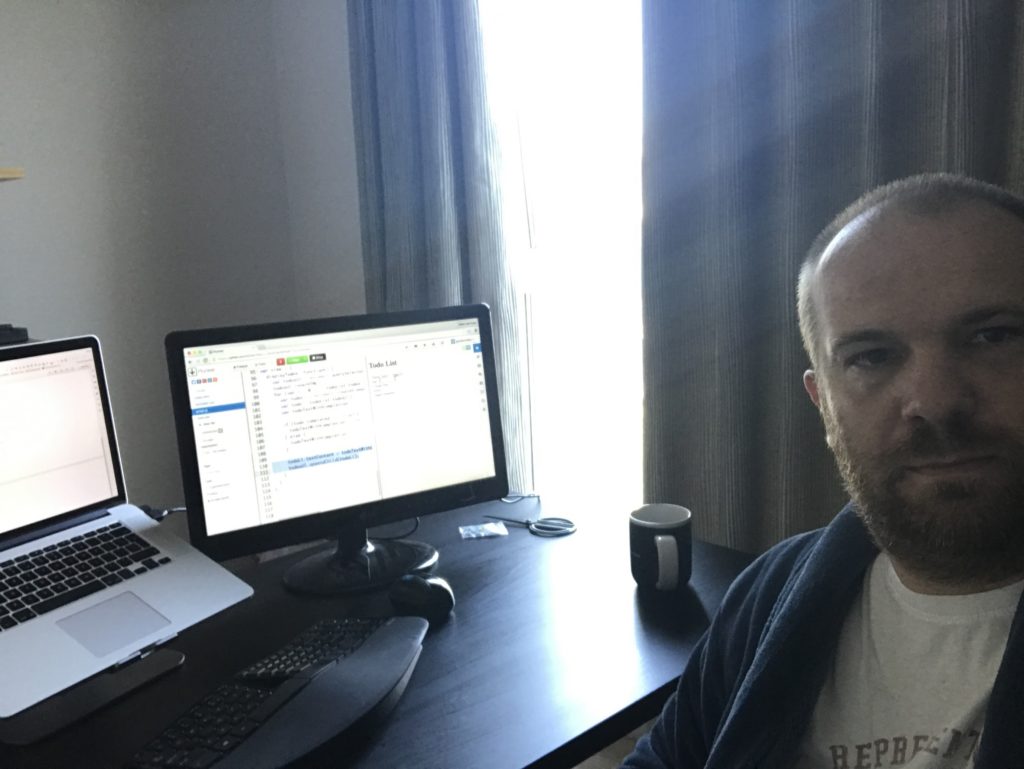
Photo: yes, that’s a badly taken photo of my monitor while watching one of the coding tutorial videos. I want to use more of my own photos (no matter the quality) instead of stock ones on this blog. And, yes, Ireland is colder than I’m used, ok? :D

The eerie silence of Facebook: Unfollow all

ENîn engleză Misc, Tools I Use · June 25, 2017

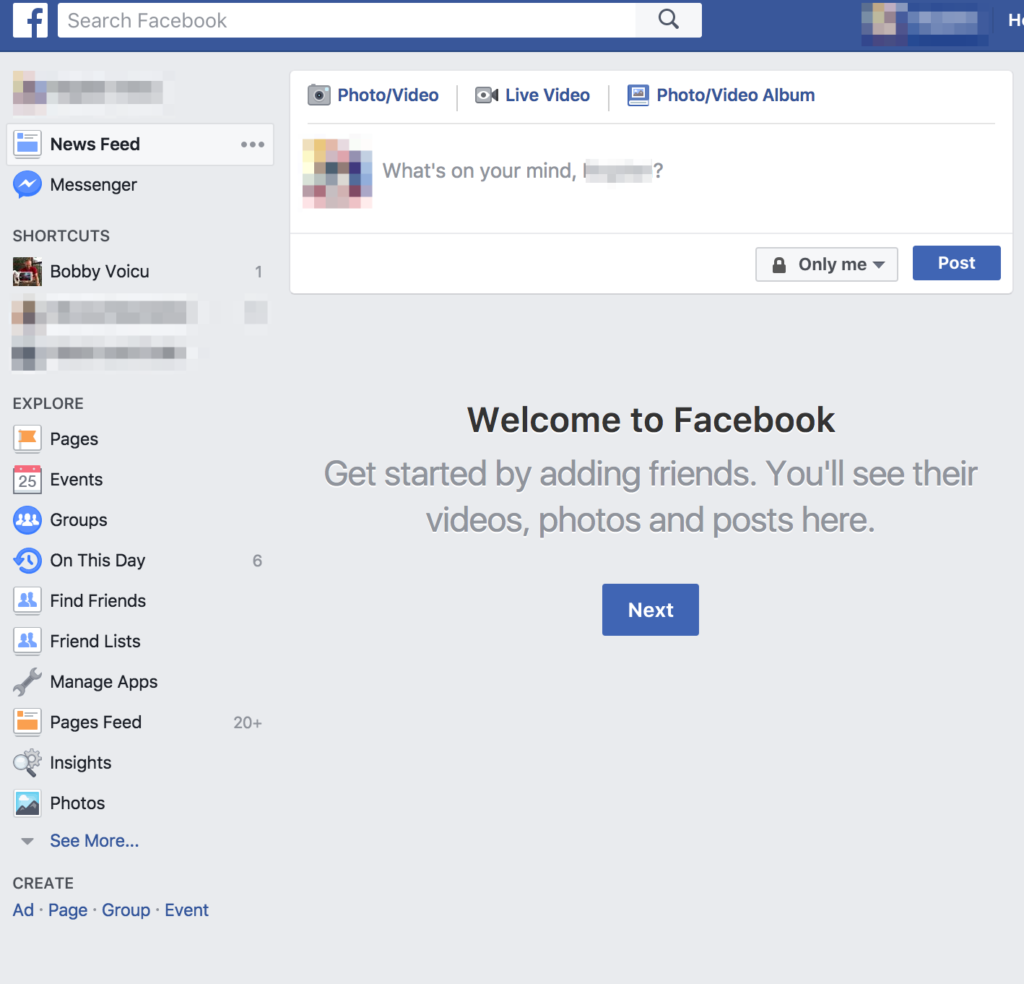
facebook unfollowed all accounts

I don’t have that many friends on my personal account on Facebook (I’m not talking about the page). Still, they are about 100-ish. People that write updates, that put links, photos and the likes. But I don’t see any of those. Yes, the screenshot above is how my personal account looks like. Sometimes there’s an ad there.

In September – October last year I unfollowed everyone on Facebook.

The reason? Well, every 2-3 minutes I would take the phone, open it using TouchID and press the leftmost icon on the third row from the top. Yeah, that was Facebook’s app icon. Then I’d pull the screen down to refresh. And lose myself for the next several minutes. It didn’t matter if I was talking to anybody: my parents, my girlfriend, my sister or, even worse, my niece. I just got lost in a black hole, all of a sudden.

At some point, though, this was happening so often that nothing would’ve changed on Facebook. I still did it. It was time to stop.

So I unfollowed everyone, as I was saying. I moved the app’s icon to another folder on the phone (I still need Facebook for access to business accounts, this is why I can’t delete my account, though I thought about it for a little while). Then I changed the icon in position 1 on row 3 with the Weather app icon.

And YOU WILL NEVER BELIEVE WHAT HAPPENED NEXT :)

For the next week or so I could tell you exactly what the weather would be for the next 10 days. Yeah, you asked me and I was the weatherman. Because my habit was still there: pick up the phone, unlock it by TouchID and then open the app in that specific position on the screen. And it took several seconds for my brain to understand that I already know what the weather will be like.

So, yes, social media plays games with our brains.

Almost a year in, I don’t open Facebook that often and, even more important, I don’t pick up my phone as often as well.

I also love that when I meet with my friends I don’t really know what they’ve been up to so we need to talk about it and I’m genuinely surprised most of the times. I still talk on messenger with many of them, so I know the most important going-ons in the lives, but I don’t see random pics, I don’t see random links.

Another side effect is that I don’t write that many personal things on Facebook anymore. I do, from time to time, but my time in the app dropped dramatically. I still get some notifications, I use Facebook Pages a lot, so I still got on Facebook. I just have a much more clutter-free life.

Were my friends unhappy with this move on my side? Some. There are some that will find out now? Yes. Will it change the way I use the app? No. I enjoy my new found freedom :)

—————

Photo: my Facebook account at the beginning of a Sunday morning.

Be There and Execute the Plan Every Day

ENîn engleză Entrepreneurship · July 1, 2017

Gelato Dondoli

One question that I get often from newly startup founders is “How do I set my KPIs? How do I know how much money should I make? How do I know how many visitsI should have?”

The answer, this early, is only one: be there every day. The KPIs should be initially related to your execution, not the results. Of course, you will improve, but focus on just doing the thing that needs to be done every day.

How do you get investors to invest?

Well, how about talking to a potential investor every day? Yes, that might mean a 30 minutes talk with a friend you know or a 10 hours search for a contact to get to a person that could invest in you. It’s the same result, though: you got to talk to one person. It doesn’t matter the time it took, that was your KPI: talk to one potential investor every day. As time goes by, you’ll get better at getting contacts, getting better pitches and so on. And it wouldn’t happen if you didn’t talk to so many people until then.

How do I get people to join my startup?

Well, why don’t you try to convince a person every day? Of course, you can learn from each interaction and get a co-founder/employee fast or you could do a half-assed effort and it might take 3 years. Still, by doing it every day, you’ll get better.

How do I get better at blogging? How do I get better at vlogging?

Create a video every day and publish it. Write 500 words every day and publish it. Even if you execute on the plan every day, but you don’t expose yourself to critics and failure, you will not move forward.

That’s it! It is that easy.

Once you do your main job every day, improving on the side things will be easier. It’s easier to get a bigger audience and promote your blog/vlog if you are already creating every day and improving. It’s easier to get someone to join your startup if you already know the answers to their potential questions. And, of course, you will get someone to invest in you once you improve your product, your pitch and your business. But you can’t do anything if you aren’t there every day, honing your skills.

I started going to the gym recently. And Miruna asked what my target is for the 3 months of the program. My answer? I just want to get to the gym every day (it’s a 4 days a week program) and respect the nutrition plan they gave me. I don’t care about anything else. I just want to get back in the habit of exercising and eating well. After that… we’ll see. For the moment, I don’t care about anything else other than being there and executing on it every day.

Oh, what if I fail to appear one day? I continue with the initial plan the next day. Again, and again, until I get it right.
————
The photo from the article is the gelato I’m gonna have once the 3 months are over. Just one. For 3 months. Because I need it! :))

The gelato is from Dondoli’s Gelateria in San Gimignano and, genuinely, it’s one of the best gelatos I’ve ever eaten (and I tested lots of icecream and gelato lately :D )

Personal Health and Fitness as a Business

ENîn engleză Misc, Startup Founder · July 4, 2017

I’ve been up and down in weight a lot in the last 5 years. The lower limit was 96kgs at some point, the upper one was 115kgs. If the start would’ve been 115kgs and the end, today, 96kgs, I’d be happy. But it wasn’t like this.

In November 2012 I was 97. In May 2013, 109kgs. In January 2014, 96kgs. In July 2014, 112kgs. And it continued with the ups and downs until now, when I’m 112kgs. Again. Not good.

So I’m trying a new approach: I’m looking at my personal health and fitness as I look at a business. Because I’m good enough at business, I should be able to put together a more coherent effort if I think in terms of budgets, resources and expected results.

First step:

Defined my targets. Both in terms of KPIs and expected time to execute on them. Obviously, I have the ideal version and the “I’m ok with” version. The ideal is 90kgs in 12 months. The “I’m ok with” version is 100kgs in 12 months. Everything while building a process that keeps my in shape for the longer term. I’ve lost 20kgs in 6 months previously. It wasn’t sustainable. It wasn’t a marathon, but a sprint, unfortunately.

Second step:

I set the time I allocate to this effort. While I usually go full throttle in every business I start, this time I can’t really do the same. If you want to become a nutrition specialist or a trainer, I can understand your 8-10-12 hours/day focus. I want something else in life, so I need to be able to do everything around my health/fitness in up to 2 hours a day the most (on average). Including cooking and exercise.

Third step:

I look at all the things I don’t know about health and I don’t want to spend time learning. And I looked for people to help me with it. I want my focus to be on executing, for the moment, not on learning new skills. This is why I looked for a personal trainer and a nutritionist. Luck would have it that I found both in one person (at least for the moment). The next specialist might be a cook. I hate cooking. Yeah, I do. Though, for the moment, I’ll do it. Maybe I’ll enjoy it, at some point. Last week was full of bland food, though. Just saying.

Fourth step:

I established a budget for the next 12 months. I made it big enough so that I can test lots of things if I want to, but I didn’t make it too big so that I become less resourceful. When you have too much money, as a business, you end up throwing money at problems instead of actually looking for a long term process as a solution. I’d probably do the same thing now if I put more money to it (I still think about hiring a cook full time). Still, there’s enough money in the budget to make it a good investment. And, when it pays off, it will be the best investment I’ll ever make.

Fifth step:

Stopped falling victim to the “shiny object syndrome”. It’s surprising that I can usually control this when it comes to business, but I’ve never been able to do it in my personal life (with some exceptions). As such, I will keep at the personal trainer/nutritionist route for the next 6 months, at least. While all those other diets (slow carb, low carb, keto and so on) work for others, they didn’t work for me. Yes, I lost kilograms (a lot), but I didn’t manage to create a habit out of it so I put them back.

Sixth step:

I’ll take one step at a time towards getting good habits. Right now I’m working on going to the gym every day 4 times a week, no excuses, while also cooking my own food. I didn’t really cook my own food for the last 15 years, so it’s not gonna be easy. But I need to because every time I tried to create a habit out of eating better I quit because it took too long to get healthy food.

Don’t think I cook 10 courses meals. Just simple things like eggs, salads, different ways to cook meat (I started to enjoy steamed hake a lot). I also look at things I can change in my diet based on my different locations during the day. I try to make it as simple as possible, so I have a small number of choices to choose from. In time, I’ll add more, but I want to have a basic baseline I know I can come back to every time when things get hectic.

Conclusion:

That was my thinking at the beginning of June. I executed the plan and now I have a gym in Cork I go to 4 times a week, a personal trainer that’s also a nutritionist, and I’ve started to cook fish and vegetables.

One thing: nobody actually tells you how the kitchen looks like after “cooking”. Fuck me, the first time I tried I used like 12 plates, 5 bowls, 3 steamer pans, 1 oven… What. The. Hell?

I’m now about 2 weeks in the program and it’s still difficult. I cut down the time to cook food to about 1-1:30h/day. I can go through preparing everything for my meals in just 30 minutes for the entire day, if I use simpler ingredients – like replace the protein from meat with low fat cottage cheese or an egg white omelet. Exercise is also a little bit more difficult, so I need just a hair more convincing that I want to put myself through “torture”. Overall, though, I’m feeling excited, I want to put in the time, I want to move forward.

This is it. I’ll probably update you from time to time to how my new “business” works, so stick around.

——-

The photo is a skating ring in New York. Even though it was really cold, people found the time to have fun and, yes, exercise. I should pay more attention.

Difficult Investor Questions for the Early Startup Founders

ENîn engleză Startup Founder · July 10, 2017

I’ve put together a list of question you should have the answers to by the time you meet your investors. You don’t need a PERFECT answer, but you need a logical and well thought one. Even if it’s wrong, at least it shows the investor you thought about it. The list is generated from my own experience talking to lots and lots of investors while raising money for MavenHut, as well as from people I’ve asked here on Linkedin and here on Facebook. Thanks, everyone, for your help.

Of course, the most difficult questions will be the ones you don’t know the answers to, as I say in this video. But you will get the answer and, the next time you hear the question, you will not be surprised anymore.

Here is the list, with the questions organized in some loosely similar categories:

Founders and team:

  • Why are you doing this?
  • Why are you the best person to solve this?
  • Are you sure your team is 100% with you on this?

Product:

  • How are you making money?
  • What are the main milestones you’ll get to with the money you take now?

Company:

  • What’s your valuation? Post money/pre money?
  • What’s your cap table? (post and pre money)
  • If you do have additional shareholders to the founders, why are they there?

Market:

  • What is your addressable/obtainable market?
  • What’s your route to market?
  • Can you scale whatever got you here?
  • How much of your market are you gonna get and in what timeline?

Plans:

  • What’s the first hire you’ll make? Why?
  • How do you become a billion dollar company?
  • How will you spend your money?
  • Do you have an 18 months (at least) business plan?
  • What would you do if you got the double amount of what you are fundraising?

Risks:

  • Is your intelectual property at risk of infringing other company’s IP?
  • What’s the biggest risk of your company and how are you prepared for it?
  • What if X (a big company in the space) clones/reverse-engineers your idea?
  • What will you do in 18-24 months from now, when the money would run out?
  • Since you don’t have your own numbers, where did you find the numbers for the industry? (just to be sure you didn’t really got them out of your ass)

The thing is, there are a lot more questions you should be able to answer, but the ones above are questions that confused me or other startup founders at the time.

Why don’t I try to give some standard answers? Well, I think that you’ll get better at understanding how to explain what your company does if you prepare the answers on your own. This way you will also be much more able to adapt if the questions you get aren’t exactly the ones you prepared for.

Here are some more questions, from other sources online:

65 questions venture capitalists will ask startups
Compendium of over 100 questions investors ask startups when pitching

———

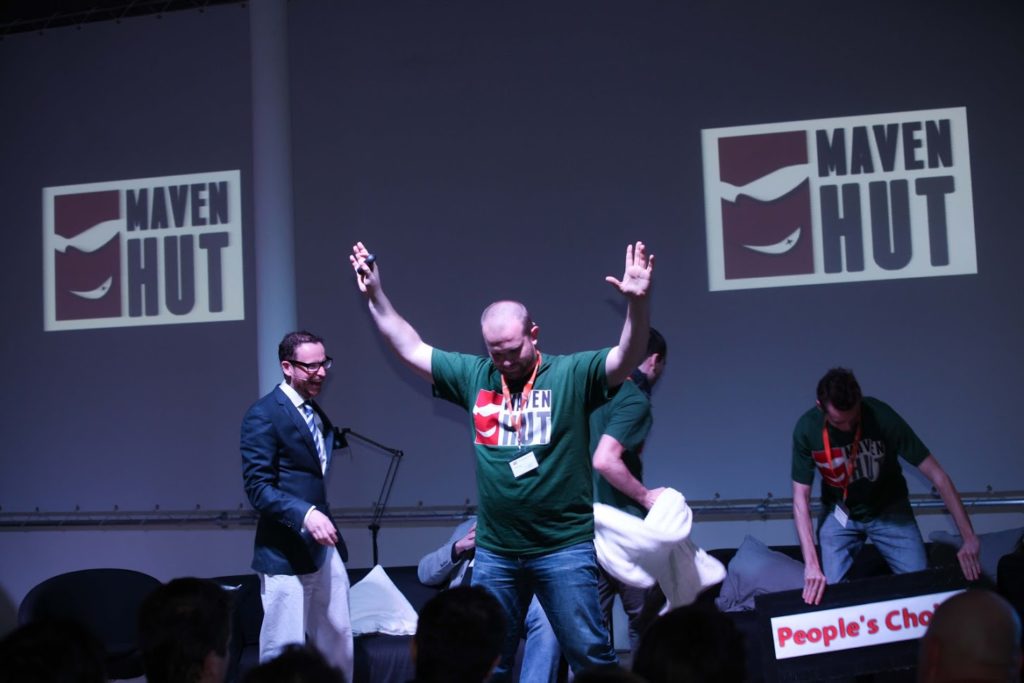
Photo: MavenHut’s founder team, including me, on the stage for Startup Bootcamp Dublin Investor Day, 2012.

  • « Previous Page
  • Pagina 1
  • …
  • Pagina 157
  • Pagina 158
  • Pagina 159
  • Pagina 160
  • Pagina 161
  • …
  • Pagina 185
  • Next Page »

Despre

Scriu. Fara un subiect anume, fara o tema anume.

Aici e o arhiva a perioadei 2005-2013, cand scriam ceva mai des pe blog.

Scrise recent

  • Logo-ul Blanket
  • Elogiu pentru o tastatura: Thinkpad T480
  • Cartile din 2025
  • Bucuria de a fi iritat (si, probabil, iritant)
  • Cum sa iti dai seama la ce esti bun(a)

Proiecte

  • BobbyVoicu.com
  • MixRift

Copyright © 2026 · BobbyVoicu.ro