• Sari la conținut

BobbyVoicu.ro

  • Home
  • Arhiva (2005-2013)
  • Home
  • Arhiva (2005-2013)

Arhiva completă

  • Toate
  • Română
  • English

Multiplier Skills and Specific Skills

ENîn engleză Entrepreneurship, Misc · September 16, 2016

road-sign-798175_1280

“I will never be able to sell something. I am the artist, I create things, I don’t sell them to the buyers at a fair. Sales people should sell, not me!”. This is what my fiance was telling me the other day, when she came back from a fair where she sold some of the art she creates. I told her something on the lines of “you should be one of the best sales persons for your own art”, thinking that every buyer wants to engage with the artists they like.

Tell someone to start learning how to sell and you’ll get frowns and “Damn it, Jim, I’m a doctor, not a sales person!” type of responses. Especially if they are a creative person or, God forbid, a coder! This doesn’t change the truth: selling is a skill you should understand and practice.

Selling is, also, a multiplier skill. The multiplier skills take all the specific skills that you have and they make the total bigger and better. I define “specific skill” as a skill that you need to do your job. Drawing is specific for an illustration artist, programming for a coder, accounting for an accountant, you get it.

I got the idea of multiplier skills from Derek Sivers’ Ideas are just a multiplier of execution article (go read it!).

Here is a pyramid of values for specific skills (by “bankability”) and multiplier skills:

AWFUL Multiplier Skills = -1
WEAK Multiplier Skills = 1
SO-SO Multiplier Skills = 5
GOOD Multiplier Skills = 10
GREAT Multiplier Skills = 15
BRILLIANT Multiplier Skills = 20
——– ———
AWFUL Specific Skills = $1
WEAK Specific Skills = $5
SO-SO Specific Skills = $10
GOOD Specific Skills = $50
GREAT Specific Skills = $100
BRILLIANT Spec. Skills = $200

Multiply the two and you get a number showing how successful you are or you can be.

If you are a great coder ($100) with weak multiplier skills (1), you will often see worse programmers being paid a lot better – like a so-so programmer ($10) with great multiplier skills (15).

The same if you are a weak designer with brilliant multiplier skills, you might see yourself getting a lot more for your efforts than your more talented counterparts.

This means that above a specific amount of specific skill (being GOOD), it might be better for you to use 1-2 hours per week to develop multiplier skills instead of trying to become great or brilliant. Of course, there are specific situations when you need a brilliant someone. If you are in that specific situation, the article is not for you. Or maybe it is, you arrogant POS! :)

What are some multiplier skills?

The first multiplier skill I became aware of was writing. I am not thinking of becoming a published author. I am thinking of being able to express your ideas clearly in written form. Writing avoids unnecessary time loss and subsequent misunderstandings. Think about it: writing a two phrases email that explains what you need beats the hell out of 5 paragraphs ones.

Selling, the multiplier skill I talked about at the beginning of the article, is another one. You sell something from the moment you are born. By crying, you sell your need for food. You sell a movie to get a date later in life. You have to sell yourself to be hired. You have to sell a product you create if you are a founder of a company (everybody sells, not only the CEO). If you are a creative person, an artist, you still need to sell what you’re creating. You need to convince your partner, kids, friends, audience, public, readers to listen to your ideas and act on them.

Public speaking is not easy to do. It is also another multiplier skill. Most of the adult people I know would need to be better at addressing groups of people. It’s not only for the entrepreneurs, CEOs or business people. As long as your job means talking to 2 or more people at the same time, it would be a lot easier if you have some public speaking skills and you don’t melt once more than 2 pairs of eyes are focused on you.

These are three multiplier skills I can think of right now. I am sure you can mention some more in the comments below.

Best Startup/Business Books I've read in 2016

ENîn engleză Book Reviews, Entrepreneurship · January 3, 2017

I’ve read several business books in 2016 and some of them were worth the time spent :)) Here are the two that I would read if I only had time for just two books.

1. The Hard Thing about Hard Things: Building a Business When There Are no Easy Answers

It took me a little bit of time to read this and I actually wish I read it earlier. Ben Horowitz tells his story from being a Product manager at Netscape to becoming the founder of one of the biggest investment funds in Silicon Valley: Andreessen-Horowitz (a16z). Oh, and between these two things he also built a billion dollar company (Opsware) that he grew during the dotcom bubble.

Why is the book really good? He talks about all the things that you don’t read in Techcrunch and the feel-good startup articles on the web. He talks about firing people while having to convince their friends not to leave the company. He talks about the fights you have as the CEO with the co-founders. With the product managers. He talks about how lonely it is to be the founder and CEO of the company. He talked to me ????

2. Chaos Monkeys: Obscene Fortune and Random Failure in Silicon Valley

Written by a guy that went through Y Combinator, then sold his company in just 9 months to Twitter, which he then quit for Facebook. The book is worth reading because it catches a lot of the efforts you go through when raising money early, when you don’t know what to do and keep pivoting and so on. I felt connected to the book more than usual because he was in the Ads team at Facebook when we were ramping our efforts on ad buying and we felt they didn’t really have all the ducks in a row. They got the product later, but in 2013-2014 it was a fucking mess.

Read it. It’s enjoyable and it will actually make you laugh from time to time.

3. Zero to One, Notes on Startups, or How to Build the Future

OK, there’s three books, not two. The thing is, though, while the book is interesting, it didn’t really hit the mark with me. I’m not too much of a fan of the contrarian view that Peter Thiel has, but he understood faster than a lot of us that Trump was more than a clown and that he would be the President of the United States. So the book is worth a read. The ideas are not necessarily bad but I think he pushes them too much to the limit.

Giveaway! Each book for one lucky subscriber :)

Finally, I will give one of these books to three subscribers from my email list, randomly. If you’re not on the list, you can subscribe here (or use the form on the sidebar). I send a weekly newsletter with interesting articles that I’ve read (usually business related, but not all the time). You can see an example here.

The random pick for the three will happen on the 15th of January and I will contact you via the email you used to register to the newsletter. Oh, and I prefer to send the books for Kindle, so you should own one of those (or use the free app from Amazon on your phone or desktop). I will send the books as a gift to your Amazon account (I prefer the US store, but any will do).

Entrepreneurial Europe vs. Asia and US

ENîn engleză Entrepreneurship, Misc · March 18, 2017

Asia’s response to Uber’s global ambitions—unlike Europe’s—was primarily entrepreneurial.

from The Upstarts: How Uber, Airbnb, and the Killer Companies of the New Silicon Valley Are Changing the World

I think this is the difference between Europe and Asia (in this case) and USA: we, Europeans, put much more focus on help from legislation and institutions, instead of being more entrepreneurial. Also, because of the legislation, the bureaucracy and the friction they generate in Europe, we are more likely not to try to solve something the entrepreneurial way.

Combine this with a culture that sees failure as a black mark etched forever on somebody’s reputation and you have a perfect storm: less risks, less entrepreneurs.

But, I have to agree, at least you get a perception of a better work/life balance in Europe than in the US or Asia. Which feels true to me :)

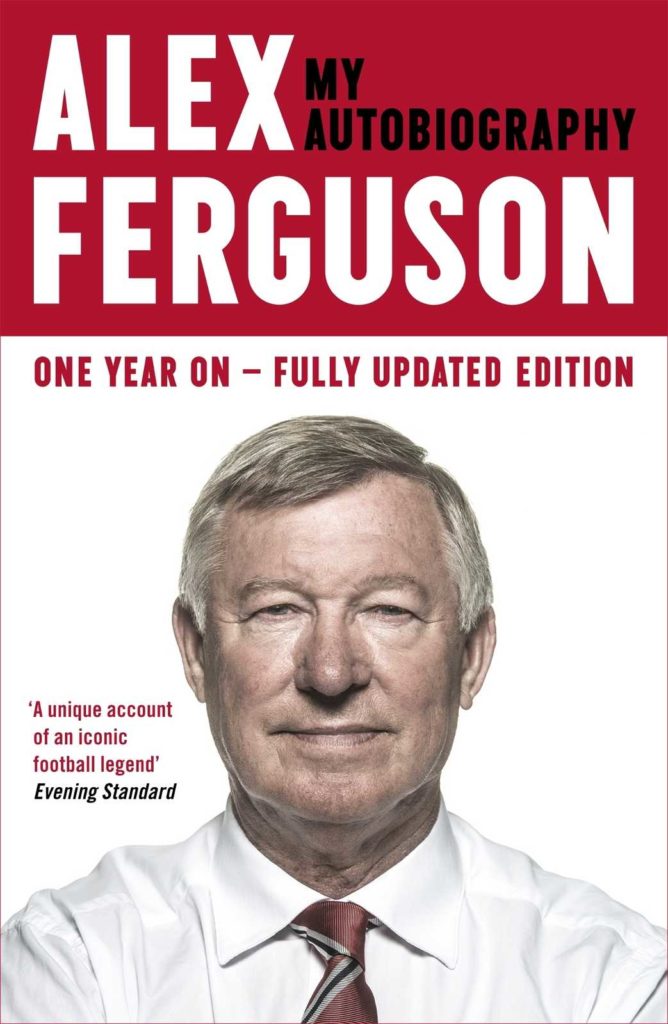
Book review: Alex Ferguson - My Autobiography

ENîn engleză Book Reviews · April 3, 2017

I’ve been surprised by how much I enjoyed this book. Alex Ferguson managed Manchester United, arguably one of the biggest football clubs in the world, for almost 30 years. His view of management, especially people management, since he worked with multiple generations of footballers, is extremely insightful. I now have a better understanding of how and why teams play one way or the other.

Another reason I loved the book is that I remember the matches he talks about: I remember the 1999 Champions League final when they beat Bayern Munich in the last 3 minutes. I remember the 2009 and 2011 finals when they lost to maybe the best team that ever played football: Messi’s, Xavi’s and Iniesta’s Barcelona. And I remember the moment they lost the Premier League Championship to Manchester City in the 94th minute.

The book is straight to the point and Ferguson explains how he worked with his staff, how he managed the press, the leadership of the club. His age, as well, became an issue as time went by. Not for him, but for everyone around, from the press to the fans.

He talks about his relationship with Beckham, with Roy Keane, with Cristiano Ronaldo or with Rooney. He didn’t forget other managers, like Arsene Wenger from Arsenal, or Jose Mourinho from Chelsea (who, incidentally, is now at Manchester United).

Really, a great book that you should pick up if you have the time. If you are a football fan it’s even more recommended.

RebelBio mentoring in Cork, Ireland

ENîn engleză Entrepreneurship, Misc · April 9, 2017

For the next 3-4 months I’ll mostly be in Cork, Ireland, where I’m mentoring the teams for RebelBio, a BioTech accelerator that SOSV has created here about 4 years ago. SOSV is, as some of you may know, the investor in MavenHut and our partner there since 2012.

I will actually act as an “entrepreneur in residence”/”I understand what you’re going through” person here for the newly minted entrepreneurs, while I’m also trying to understand BioTech and what it means in terms of investment and entrepreneurship.

Of course, BioTech means life changing things, as well: solving humanity’s problems like cancer, food shortages, food poisoning, just to give you an idea of some of the things these teams are working on. The thing is, though, I will never be a scientist, but I can be an investor, a mentor, an adviser or, why not, at some point in time, a co-founder of a BioTech company. And I want to understand what it means. This is why I’m not necessarily focusing my attention on the science part. It’s highly unlikely I’ll be ever in a position to do something directly in this area :)

The teams are now in the pre-accelerator period (when they learn more about the business side of things), before going to the product creation side of things (R&D, lab time, basically). I’ll update you on what they as time goes by and I get a grip of what the hell they’re creating :D

So, for the next several months, I’ll also write about Cork a little bit. A small city compared to Bucharest and a completely different lifestyle for me. I mean, in 10 minutes I’m out of the city, while in Bucharest, some days, I’d still be trying to get out of the side street I’m coming from, trying to get to my destination. Actually, for the first time in the last 20 years, I will not have a car at hand (mine or somebody else’s). Which is really weird :)

Sun and rain in Cork City, Ireland

A post shared by Bobby Voicu (@bobbyvoicu) on Mar 18, 2017 at 6:42am PDT

Update: Because I was asked: Cristi is now managing MavenHut. I’m still part of the board of the company, but since I’m more and more interested in investing, I’ve cut my time operationally as much as possible.

What's it like to start a company?

ENîn engleză Entrepreneurship, Startup Founder · April 11, 2017

Last week I’ve talked to the entrepreneurs from the 2017 cohort of RebelBio, in Cork, Ireland. I’m hopeful I’ll be helping them overcome at least some of the ongoing issues you face as a startup founder. So I had a presentation that touched some of these points:

1. You’re not alone

You’ll often feel that you are alone and nobody understands you. While it may be true that most people don’t understand you, there are some that do: the people around you, that go through the same shit. People that just went through it are also a good source of help (I’ve started MavenHut 5 years ago, I still remember the feeling of waking up and not knowing what I should do next).

"I remember the bad parts. If you asked me to start a company now I'd go on a corner and cry" thanks 4 keeping it real @bobbyvoicu @RebelBio pic.twitter.com/6rpzFZB3Nj

— Emilia Díaz (@EmiliaDiazCL) April 7, 2017

2. Too much information, too many mentors

You don’t have to act on everything NOW. Just know that these mentors are available to help and know that what they say is something that you will need at some point. It’s a resource you can use at some point.

3. You will fight with your co-founders

This is not an issue. It’s an issue if you don’t sort it out and let it linger. All of you are together in this so find a way to sort out the issues when they appear.

4. Draw a co-founder agreement

Look, maybe the most important thing you have to do along with your cofounders is to align your expectations. Even if you don’t make it a document, make it an email that you all know. Things get forgotten in time (everybody kinda forgets things that they don’t really care about), so keep this as a reminder.

5. Define success

What is it that you want from this company? Money? How much? Reputation? What does it mean? Being in scientific journals? Appearing on the cover of Forbes? All of you need to understand what the others want so that you can align.

6. Define failure

When do you stop? While it’s anticlimactic to think about it, you should. It’s not a bad thing. If you say that you will stop if you don’t get enough funding (and define the amount clearly) in a year, you will have a lot of fire under your ass to make that thing happening.

7. What are your cofounders’ limits?

Each one of us has limits: being it family time, not being able to travel, financial issues (mortgage). Talk about them as early as possible.

8. How to use the accelerator (if you go through one)

– Meet with as many people as you can and pitch your business
– Ask them two questions: what should I do to improve my pitch & who do you know that you think would be interested in what I do?
– Create a monthly newsletter where you add (ask them before!!) all the potential investors and mentors that you talk to. Just to keep them updated, even if they are not interested in your company or domain. I’ve never heard of an investor saying “no, don’t send me information about your company”. We’ve done it pretty successfully at MavenHut.

That’s it for today :) A good, complementary reading might be the story of the first year of MavenHut.

By the way, I’m sending a weekly newsletter with great things to read (mostly business, but not only). You can subscribe here.

I almost quit MavenHut 6 months after starting it

ENîn engleză Entrepreneurship, Startup Founder · April 19, 2017

One time. It was that moment when I woke up and said: I can’t take it anymore. It was just 6 months into MavenHut, at the end of August 2012, but I felt that all I was doing was for nothing, I wasn’t moving forward at all.

Cristi and Elvis, my co-founders, were creating a great product, that was interesting for our users. We were at about 100,000 installs in July-August 2012. I still said to myself: I can’t do this anymore.

I was the one raising money for MavenHut. I was the one meeting investors and talking to them, getting all the criticism from them, trying to convince them that a trio of guys from Romania can build a global business in gaming using a Solitaire game. And investors would say things like “oh, interesting, let’s talk next month, to see if you are still growing”. Or “I would invest $50-100k now, but only if you find someone else to invest the rest”. We were, at that point, looking for about $500,000 in investment, so it wasn’t that easy to come out with “the rest”.

Nobody told me that raising money took this long. When you were reading the startup literature you were under the impression that it takes several days, the most, to raise money.

Cold Truth

Well, that day of August 2012, I was finally accepting the hard truth. It might be even longer than the 6 months I had already under my belt. Even though we had good signs from investors, even if we could take €50,000 as investment from Enterprise Ireland because we won a pitching contest with them. Gaming is a cash hungry business. €50,000 would not be enough to hire 2-3 good people and also promote the games. We would be running out of money almost as soon as that money hit our accounts. And this time we would have to pay the salaries of the people that trusted us enough to come and work with us, not only the food for the 3 co-founders.

Add to this the fact that I started 2012 with several tens of thousands of dollars in my accounts and now, when I looked up the balance, all I could see were $300. I had put almost all my money in MavenHut.

Moreover, I no longer had any personal revenue to speak of. Previous clients from my old consulting business asked me constantly when I was coming back and “make real money”, not “startup money”. I’ve already promised my co-founders that I would only focus on MavenHut, so it was no contest. We all quit on previous opportunities, it wasn’t like I was some kind of hero.

That’s when I stumbled. For a second, there, I didn’t believe that I could do it. I didn’t think I could make it for 4 more months until the end of 2012. That’s when we would shut down the business, provided we didn’t raise enough money.

That was the only time I ever felt that I would quit MavenHut.

How come that I didn’t quit, then?

First of all, I wasn’t alone in this. At one point or the other, my co-founders felt that it wouldn’t work, as well. But we found that talking to each other helped. So I had a long talk with Cristi that day.

Cristi suggested I should take one of the consulting contracts my previous clients wanted me to take and see if I really wanted to go back there, while also making some personal money. He also kept reminding me that SOSv, the investment fund, was really interested in us. And the only reason it was taking so long was that we were trying to close the deal during the holidays. Lawyers and investors need to take vacations as well. So we had a business deal in place, but no contracts to show yet.

Actually, this is what pushed me over to almost quitting, if I think about it.

The context: we already had the deal in place with SOSv. They would invest 50K now and, based on MavenHut hitting specific KPIs, they would follow with another €500,000 investment. But signing the documents kept getting postponed by different things I perceived to be “small” and “not that important”. The last block on the road was that the lawyers (ours or theirs, I don’t remember exactly) just let us know that they would be on vacation for a week. Or something like that.

Keep in mind that SOSv was one of the 50-60 potential investors I’ve talked to in the previous 6 months. People that kept telling me things like:

– “Solitaire is free on all computers, nobody will give you money for it”
– “what if Zynga decides to do a similar game?”
– “right now there is another team starting in Dublin and the 6 guys in it were part of big companies like Tilt Poker, Ubisoft, EA” (random names, I can’t remember the exact companies, but they were big)
– “you only have one developer in 3 co-founders, that’s not good”
– “gaming is too risky”
– “I have gaming companies in my portfolio and I don’t want to invest in another ever”
– “I will put $50k, $100k, only if somebody else puts the difference”
– “let’s talk in a month when you should have more users”
– “I don’t invest in companies pre-revenues” (it was a lie)
– “I am not interested in revenues so early, but you should have another product besides Solitaire”

All of these reasons are not something new for anybody that raises money. It’s the same, with a different flavor. And it’s killing you slowly.

What did I do?

Finally, what happened is that I took a consulting contract. Which should’ve been over and done in 2 weeks. And it took 3 months. By the time I got the money from that contract in my account, we already signed the deal with SOSv and already got the follow-on €500,000 investment, as well, because we moved really fast to the KPIs set up for the €50,000 deal. By the end of 2012, when we would’ve killed the company if we didn’t raise money, we were 8 people at MavenHut and the company was growing fast. And in January 2013, the first month we made any real money, we made enough to pay all the salaries from revenues. By August 2013, one year after the fateful day, MavenHut was generating about 30 times the revenues from January 2013.

I sometimes wonder what would’ve happened if I was alone in MavenHut. If I had no people to confide in that would understand me: Cristi and Elvis. I don’t think I would’ve quit, to be frank, but it was a lot easier to be able to talk to someone about your frustrations.

It’s interesting that, 4 years later, I rarely remember those bad, bad moments. If you ask me about the early years of MavenHut, just 4-5 years ago, most of the things I would tell you are good things. Elvis coding like a ninja, Cristi understanding the product, me raising the investment “almost” overnight.

But then, I meet with an early stage entrepreneur, like I did recently. And she was beyond frustration with the responses she was getting from investors she was meeting. And I remembered how frustrated I was during 2012 when I was raising money. All of a sudden, the memories came back and it wasn’t “me raising the investment almost overnight”. It was me almost leaving MavenHut.

When you read on the internet about startups, you mostly read about the AirBNBs and the Dropboxes that raised money easily. Even though, I’m sure, it didn’t happen like this for them, as well. But, hey, it’s all fun and games until it isn’t.

So, what next?

What should you do if you think about quitting?

First and foremost, think about what you’re feeling? Is it just the frustration talking or you really don’t trust your business to make it anymore?

If it’s the second case, you should quit. You will be the worst resource for your startup ever if you don’t trust what your company is doing.

If it’s just the frustration talking, then you can go to the next step: removing the frustration or learning to live with it.

Identify what frustrates you

For me, the frustrating thing was the speed (or lack of) with which things were happening. When I looked at it carefully, I understood I was expecting something else. Years of reading about startups made me believe that things happen a lot faster. It wasn’t true for us, though. And, after talking to a lot of entrepreneurs, it’s not true for everybody but a few, few exceptions.

I was also frustrated by not having money anymore. Personal money. Since I spent most of my savings on company related stuff (buying ads, paying for trips to Ireland/Romania and back, really small salaries for us to pay for rent and food), I felt uncomfortable with not having any stream of income.

You can be frustrated by lots of things. By not having users. By not having the best product you can build. By not hitting your targets. By having bad KPIs. By your relationship with your founders. With your employees. With your investors. All of these reasons are valid reasons to feel frustrated, but you need to identify them and face them.

Face the frustration

Waking up wanting to quit doesn’t just happen over night. You probably had issues with something for the last months or so. But you just kept saying it’s just a phase, it’s a thing everybody goes through. And you’re right. Everybody goes through this kind of moments, but not everybody does something about it.

So, how do you face it? Well, the easiest way is to talk to someone as involved as you are in the company. One of your co-founders would be good. If not, talk to your mentor (you do have a mentor, right?). Your investors, if you have them already, could be good discussion partners. Or maybe you have some company advisers. Tell them what you feel. Ask advice. Most of the times, they have more experience than you and they might know what you are going through or put you in contact with someone that does.

You’ll find out that most of the times, just talking about the things that frustrate you will solve the issue. You just need to relieve some pressure. Or you will find the solution on your own, once you speak out loud.

Obviously, be careful who you talk to. Not all investors are ok with you saying you want to quit and not all co-founders will keep trusting you. Just don’t be stupid about who you trust. And, if you were, well, it’s just another thing you need to sort. And you just learned you can’t trust that person for advice or help.

Solve the frustration

Once you identified and faced the frustration, you need to solve it.

More often than not, you just solve your frustration by understanding that some things take time. And you need to learn to wait it out. Like the holiday of the lawyers I told you about earlier. Not even a month later we already signed the initial investment and we had €50,000 in our accounts.

Of course, you can still work during that time. One thing I remember doing then was to jump on the plane and go to Cork, where SOSv offices were, and talk to their CFO. I wanted to be sure that he had all the elements he needed to correctly estimate the potential of our company. I had a three-hours meeting and I learned a lot in that meeting. And Steve, the CFO, confirmed to me that it became a lot easier to understand our business model once he talked to me.

On the other hand, if it’s something that is not time-related, you need to solve the issue. But now you know what’s it about. So you can find someone to do it if you are not good at that. You can read about it. You can take courses. Whatever. As long as you know what the issue really is, you can do something about it.

In the initial stages of the investment process, I needed to do some sort of revenues/cost estimates. And while I could’ve probably done it, it was easier to talk to someone to help me. And this is how our first CFO got into the picture.

What if the KPIs of the company don’t look good?

Well, this is not a good reason to quit. You just make the numbers better.

If you don’t trust that you can make the KPIs better, then you talk to your co-founders/investors and you quit. Or take a different position in the company.

Finally, if you still want to quit, talk to the stakeholders in the company and leave. It might be the best solution for everybody. Just don’t leave tomorrow. Give people time to adjust to your leaving, make the transition and then go. And, probably, in 2-3 years, you will forget the bad things and you will want to start a new company. And the cycle goes like that again.

And, to answer my own question in the title: What if I quit then? Well, I would’ve probably missed a great adventure. I’m just glad I didn’t :)

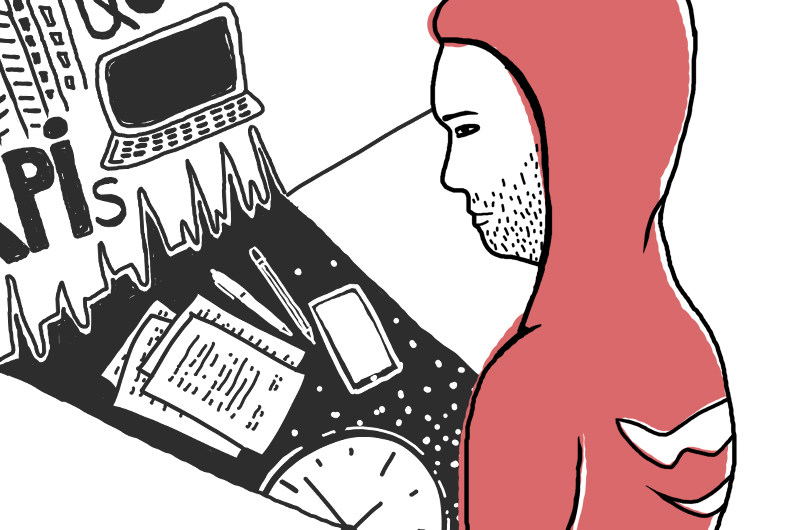
Article illustration specifically created for me by Miruna

P.S.: Don’t forget to subscribe to my newsletter. I send a weekly email with the best things I find to read online (mostly business, but not only).

Online services and tools I pay for

ENîn engleză Tools I Use · April 20, 2017

I was going last week through my “spring cleaning” of things I use online. I’m not talking about the business tools, but the services and tools I use, for my own, personal benefit. So I thought it might be interesting for you to read an article about all the things I can vouch for since I give them the best review ever: opening my wallet every month. Who knows, maybe you get some ideas.

Dropbox

I’ve been using Dropbox for so long now, I can’t really remember how it was before it existed, when I needed to carry all my files with me, on a USB stick :) It took me about 3 years to say “ok, I’ll pay yearly, it makes more sense” :))

Evernote

I actually wrote an article about how I use Evernote about 3 years ago and the way I use it didn’t change much. I got into the annual payment last year, as well. I moved to Premium once they changed to the new pricing options.

Pocket

I don’t really use Pocket as a “dump everything I want to read” tool (that’s what Evernote is for). I use it more for “I need to have something to read on the plane, so I will add all these 40 long articles to it”. Because the only way I could have the mobile sync was to pay for it, I paid for it. Now, that I think about it, I travel a lot less and the internet is no longer that much of an issue, so I might stop using it. But, since I paid annually already, we’ll see. Oh, and the reason why I use it over Evernote for reading on mobile: the articles look a lot, lot better and less cluttered. I don’t know why, I just like it more. Later edit: I stopped paying for it, since I don’t use the offline option as much anymore.

Google Drive

I just use it for backups. Oh, and Photos, because Google Photos is the best photos app ever: have you tried searching in it? It’s worth it just for the search images function and how well it works.

Netflix

Need I say more? I pay for the bigger account, with 4 devices and UHD content, but I don’t really see much of a difference on a 4K screen between UHD and FHD, frankly. If I think about it, since I pay monthly, I wonder if I can pay yearly.

Hulu

Some TV series are available here and not on Netflix, so I pay for the account without ads. I need to check out if I can pay yearly as well. While Hulu is not available outside of US, I travel quite often there that it makes sense. And sometimes I get “creative” about it :) I stopped using Hulu. It just wasn’t worth it anymore.

Tennis TV

WTAtv.com

It’s really bad that WTA is not on it anymore since I watched as many matches of the Romanian ladies as possible, but I still keep it for the ATP games. And my father uses it, as well, and he would be really sad if he didn’t have it anymore. And I really can’t have my father sad, can I? :) I also added WTAtv when it started to stream. Unfortunately, WTA’s streaming site doesn’t have an app.

Spotify

I’ve created the account the last time I’ve been to the states. It’s perfect for several people in the family (you can add up to 5, I think, under the $15/month contract). I pay monthly, cause I wasn’t sure I want to keep, but I’ll see if it’s possible yearly. I used to pay for Google Play Music, but I didn’t like it as much. I think Spotify has a better discovery engine and I like this a lot.

Overcast

The best podcasting app there is on iOS. I really like it (the cutting of pauses alone reduces podcasts duration by 5-10%, probably), but I hate that there isn’t a macOS version. There’s not an Android version, also, but I don’t use Android, so I don’t really care about it.

Myus

I need a stable US address and this is a good solution for me. They changed a little bit since I started using it: I used to be able receive packages and letters there with the basic account. Not anymore, so I need to look a little bit at how much I really need it now. The thing is I got a replacement bank card sent there and “receiving packages” is no longer part of the plan, so I needed to reorder a new card from the bank to another address. Which was bad, as you would expect.

CyberGhost

The best VPN solution I used in the last years. I used some others before and I had some issues so I preferred to go with CyberGhost. The reasoning at that moment was that if I really had any issues I could actually meet them and talk to them since the company is based in Bucharest and I could actually go to their office. Thankfully, I didn’t need help, since the app worked really well doing what I need. Though now I’m a little sorry I didn’t visit them. Who knows, maybe I could’ve invested a little bit in them and be even happier about the acquisition they announced last month :)

I use VPNs because I travel a lot and I feel uncomfortable connecting to public wifi networks without a VPN. Yes, I get “creative” with streaming services from time to time, but not as often as you would think. I’m a lot more concerned about security.

I pay Cyberghost yearly, as well.

Kindle Unlimited (Amazon Prime)

I’ve used Kindle Unlimited sparingly from time to time. You basically get free books to read, but the books aren’t always the greatest. Still, there are some worth reading, like The Simple Path to Wealth by JL Collins. But combined with Prime, which I started to use more in the last year or so since The Grand Tour is free with Amazon Prime and staying a lot more in the US and Ireland, I use Prime for free or cheaper deliveries as well. Again, I pay monthly, I need to look if it’s possible to pay yearly.

1password

It’s not a monthly service, It is a monthly service now, for which I pay :) I paid for it on all the platforms I use (macOS, iOS). It’s the service I use the most on a daily basis since I have weird passwords that I always forget :)

RunKeeper

I haven’t run since September, but I keep paying this monthly because ONE DAY!!!! SOME DAY!!!! I actually played a lot of tennis during the winter which caused some weird problems with my Achilles tendon and I need a treatment which will happen in May. So hopefully, by June I will start using the app again. I stopped running. I still go to the gym 3 times a week, but I replaced running with water sports (kayaking, in particular).

Soulver

This is an app I paid about $10, I think. It’s the best calculator there is. I don’t know how to really explain it, but it’s good :)

Because I don’t consider my blog a business, here are some things I use for the blog, as well:

Mailchimp

I started to use it recently for this blog’s Curated Reading List. I used to use Aweber, but I hate their design section (I don’t want to create an HTML template, I know it’s possible). I pay for it monthly, I don’t think they have a yearly program since you pay based on the number of users you have.

Aweber

I used this for the last 5-6 years and I really like it as a platform. I understand it, it seems really straight forward for me. Designing a good looking email is an effort that I don’t want to make, unfortunately. So I am gonna quit on it in the next 1-2 months (once I move some email lists).

Hostgator

I’ve used it for 8 years or so, I think. I have all the small sites I still own there (from this blog, to my cousin’s, to Miruna’s illustration site and interview site). I should look at paying yearly :) I actually moved all the sites I own to wpx hosting and I just use Hostgator for experiments I try with some sites, nothing important.

ContactOut

Whenever I need to contact someone I found on Linkedin, I prefer to do it any other way than through Linkedin’s messaging system. I prefer email and this is the tool I use to see if it’s available.

These are the service and platforms I use every month. And I support them with my credit cards :)

Food for Thought: Over Invested, Less Objective

ENîn engleză Entrepreneurship, Misc · April 26, 2017

“Because of the amount of money I’d spent, I felt incredibly invested in making sure the car was always perfect. It made me realize that most rich assholes are just too protective of their stuff.”

I’ve found this quote on the okdork blog, in this article. While Noah Kagan talks about buying a $70,000 Jaguar F-Type (which in Ireland is about €140,000), I think we feel the same about anything that we invest a lot in – either money or time.

What happens when we invest too much in something, relatively to what we can afford? We become overprotective. We stop being objective, all of a sudden. We overvalue the thing even more. It also becomes a defining part of us. And I don’t think it’s good.

It happens when you invest money in a business, as well. The business you invested the most money in gets the most of your time, even if it might not be the best business you invested in.

It happens when you invest time in relationships: it’s gonna be a lot more difficult to see the problems with your childhood friends or your long term relationship.

Food for thought: when is it too much for you? Financially and time wise?

How I use Reddit and how to make the site useful for you

ENîn engleză Tools I Use · May 4, 2017

How to use reddit and make it an useful tool

During the last 6 months I found myself using Reddit more and more. I’ve had a Reddit account for the last 10 years or so, since the times of Digg, Delicious and StumbleUpon. The reason I didn’t really use it until recently, though, is that I thought the site was crowded with things I didn’t care to know, overrun by people that wanted cat pics (I love cats, I lose hours from time to time watching at photos, but still…).

Until, once, I remembered something a friend of mine wrote about: if you want to understand something, you have to actually use that thing in earnest. So I started reading about “How to use Reddit”. And here’s what I ended up with :)

What is Reddit?

A forum of forums, a community of communities. It’s a collection of information from every domain possible which gets upvoted and downvoted by the multiple millions of users there and, based on that, it gets presented to all the users/readers on their homepages. If you don’t personalize your homepage it becomes a collection of photos and politics. But if you DO personalize your homepage, it’s a great tool to know what your community’s interested in.

First thing: use Reddit Enhancement Suite. I don’t know everything it does, but I know that my experience is so much better than with the default Reddit look/options. It’s a browser plugin that works with most browsers. From now on, in this article, I assume you have RES installed.

Second: you can find a subreddit (a niche forum, if you want) on about any subject possible. So you have to decide what kind of information you want to have on your front page of Reddit. Because, yes, Reddit has highly personalized homepages for every user. You can, basically, subscribe to any subreddit to appear on your home page and, more important, you can remove any subreddit from your home page.

You go here, where you can see the subreddits you subscribed to. As of now, I’m subscribed to about 100 subreddits, mostly business and travel, but I am also subscribed to things like YouSHouldKnow, PS4Deals, PS4, which are things I’m interested in. I’ll put a list with all the subreddits I’m subscribed to at the end of this article.

For obvious reasons, if you are interested in business and startups, subscribe to /r/Startups and /r/Entrepreneur. Also, one of the best subreddits I’ve seen around is /r/JustStart. Targeted mostly to Amazon affiliates, it’s really good because it has ridealong case studies (people write what happens to their business almost every month and it is really, really interesting to read). Another similar one, for any type of entrepreneurial business, is /r/EntrepreneurRideAlong.

Also, if you want to find interesting subreddits, search in Reddit. Or, even better, you can search for “interesting subreddits in [niche]” on Google and you can find lists from people that are really interested in the same things.

This is how I find good content to read.

Participation in communities

Another thing you can get from Reddit, though, is participation in communities. If you are the person that likes to help others, but on your own time, not theirs, Reddit is the best place. I go, every 2-3 days, to /r/Entrepreneur and /r/Startups and look at the New section on each subreddit. That’s where you see the latest things people post. And I try to comment, helpfully, on those things (if I have something to say, obviously). The reason I go to New instead of Popular or Controversial is that, by the time I get to the posts in those sections, I really have nothing to add. Most of the comments are thoughtful, people are genuinely trying to help, so I’d just repeat what others said.

Of course, from time to time you might have something to add in form of a post. An interesting link, something you want to ask or share. As long as it’s interesting for the community, people will react well, thank you for it and share with others. Be careful, though, at self-promotion. And I don’t say this about things you share with the community (my post about quitting MavenHut was received well enough), but about links to your blog/website that don’t really add anything to the subreddit. Then you will be hit with a lot of downvotes that will kill your karma. And some sarcastic comments that you will not enjoy :)

What’s karma?

Well, it’s a kind of credits system. It shows how relevant what you say and publish is for the communities you are part of. I have about 200 karma at this moment (which is really low), but I’ve seen accounts with tens, if not hundreds of thousands of points. Truth is, each subreddit has a different chance of getting on the /all page (which is, basically, the page everyone sees by defaultif they didn’t personalize their homepage). Once you get there you will probably generate about 30-40,000 karma. So, if that’s your play, this is where you need to get to. Most of the things in the subreddits I follow don’t get to /all, so you don’t really get a lot of karma.

And talking about /all: until recently I didn’t look at the page at all. It was full of politics regarding US elections (both Trump and Clinton fans manipulated the algorithm to get their stories on the front page). Several months ago, though, Reddit gave users the opportunity to exclude subreddits from the /all page. And now it’s somewhere I go from time to time. I removed almost all politics, all conspiracy theories, almost all pics. It makes a much better page for me now :)

Finally, before showing you my subreddits, I have to tell you that it took me about 2 weeks to actually start to get what Reddit is about and about 3-4 months to actually start making an effort to contribute to the communities. I do this about 3-4 times a week, for about an hour (contributing, I mean). I also read Reddit almost every day, for about 30 minutes, to see if there’s something interesting to read available.

Here are the subreddits I’m subscribed to: (if you want the link, just put reddit.com in front of it, I’m not gonna add 100 links. I’ve bolded the reddits the I think are really, really interesting.

Keep in mind that these are things I find useful, but there are some aspirational things there, as well (like /r/LongTermTravel). A guy can dream, right? :)

A list of all the subreddits I’m subscribed to

/r/entrepreneur
/r/startups
/r/entrepreneurridealong
/r/JustStart

/r/travel
/r/books
/r/history
/r/longtext
/r/ireland
/r/lifehacks
/r/cruise
/r/webmarketing
/r/todayilearned
/r/smnallbusiness
/r/wanderlust
/r/TrueReddit
/r/emailmarketing
/r/lounge (I think you need to be buy gold for this – like a premium subscription)
/r/youshouldknow
/r/datasets
/r/digitalnomad
/r/analytics
/r/debtfree
/r/Cork
/r/depthhub
/r/solotravel
/r/printSF
/r/adventuregames
/r/lowcar
/r/ifyoulikelblank
/r/truegaming
/r/explainlikeimfive
/r/travelhacking
/r/buyitforlife
/r/mildlyinteresting
/r/irishtourism
/r/everymanshouldknow
/r/playstationplus
/r/travelprotips
/r/getdisciplined
/r/dotcom
/r/travelblogging
/r/OutOfTheLoop
/r/PS4Deals
/r/OffGridCabins
/r/growmybusiness
/r/longtermtravel
/r/TravelHacks
/r/CozyPlaces
/r/PPC_Analytics

  • « Previous Page
  • Pagina 1
  • …
  • Pagina 156
  • Pagina 157
  • Pagina 158
  • Pagina 159
  • Pagina 160
  • …
  • Pagina 185
  • Next Page »

Despre

Scriu. Fara un subiect anume, fara o tema anume.

Aici e o arhiva a perioadei 2005-2013, cand scriam ceva mai des pe blog.

Scrise recent

  • Logo-ul Blanket
  • Elogiu pentru o tastatura: Thinkpad T480
  • Cartile din 2025
  • Bucuria de a fi iritat (si, probabil, iritant)
  • Cum sa iti dai seama la ce esti bun(a)

Proiecte

  • BobbyVoicu.com
  • MixRift

Copyright © 2026 · BobbyVoicu.ro