
• Sari la conținut

BobbyVoicu.ro

  • Home
  • Arhiva (2005-2013)
  • Home
  • Arhiva (2005-2013)

Arhiva: iulie 2017

Continuă în arhiva completă

  • Toate
  • Română
  • English

There are bad days, too

ENîn engleză Startup Founder · July 28, 2017

I’ve crashed hard for the last 2 days. I don’t want to do ANYTHING :)

Several years ago I’ve told myself I’ll never fly somewhere early-early in the morning for something just to fly back the same day. While I might be ok that day, it fucks up several days after that (I’m not 35 anymore :D ). And I managed to keep my promise for the last 2-3 years. Until Wednesday, 2 days ago.

I’ve been to London for RebeBio’s Demo Day (see here the pitches, if you want). And, instead of flying a day before, getting a good night sleep before the event and flying back at the end of the day, I woke up at 5am to fly to London. And this fucked me up completely.

Now, on Friday, I’m on my second day of “Fuck off, I don’t want to do anything!”. Even going to the kitchen to eat is an exercise in motivation. Looking over the design of a side project I’m doing? Not gonna happen.

Several years ago I hated these days. Even worse, I hated myself for not being able to be at peak efficiency every day.

Not anymore. There are bad days, too. Keep this in mind for yourself, as well.

Oh, and some reading on how important sleep is as a productivity tool.

P.S.: for the first time in 8 months, I almost forgot to send my weekly newsletter yesterday. Go figure!

——-

What you see in the image above is Cliffs of Moher on a really, really bad and shitty day. Still, a wonder to see anytime :)
How to Handle the Investor Rejections

ENîn engleză Podcasts · July 25, 2017

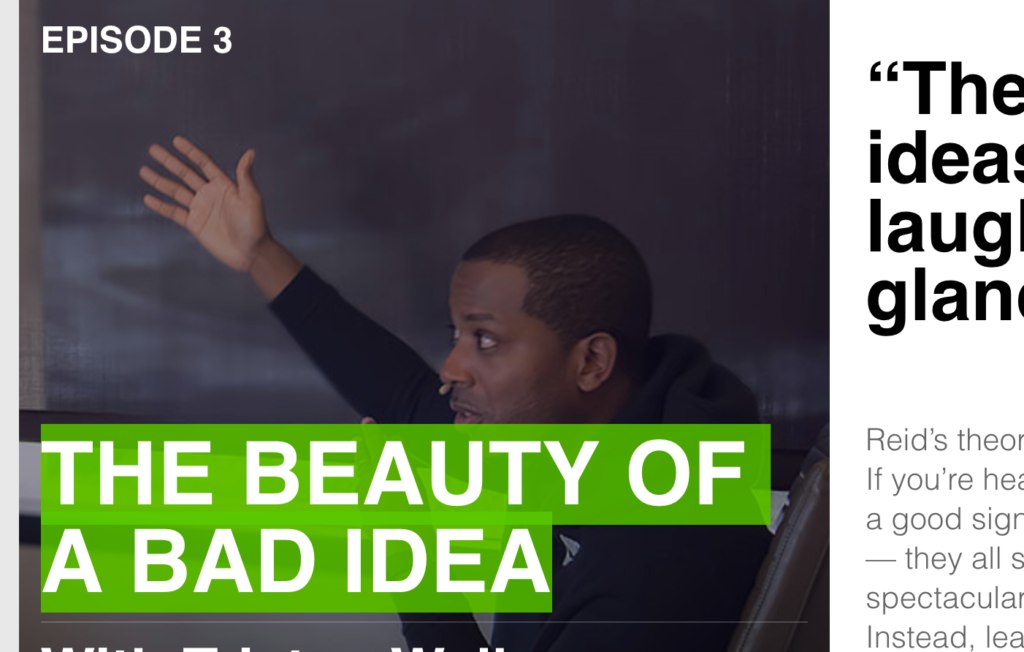
I was listening recently to Reid Hoffman’s podcast, Masters of Scale. Listen to the third episode, The Beauty of a Bad Idea. I would link directly to it, but the site is weird and there’s no direct link, so find it for yourself.

The reason I think you should listen to the episode is that it tells the story of getting rejections from VCs. It gives you an idea of how to handle those rejections and, most importantly, how to identify investors that might waste your time. That’s because some VCs don’t really understand what you’re doing, but they just don’t want to say NO. And it means you waste valuable time, time you don’t really have.

It’s 30 minutes, go and listen to it.

Difficult Investor Questions for the Early Startup Founders

ENîn engleză Startup Founder · July 10, 2017

I’ve put together a list of question you should have the answers to by the time you meet your investors. You don’t need a PERFECT answer, but you need a logical and well thought one. Even if it’s wrong, at least it shows the investor you thought about it. The list is generated from my own experience talking to lots and lots of investors while raising money for MavenHut, as well as from people I’ve asked here on Linkedin and here on Facebook. Thanks, everyone, for your help.

Of course, the most difficult questions will be the ones you don’t know the answers to, as I say in this video. But you will get the answer and, the next time you hear the question, you will not be surprised anymore.

Here is the list, with the questions organized in some loosely similar categories:

Founders and team:

  • Why are you doing this?
  • Why are you the best person to solve this?
  • Are you sure your team is 100% with you on this?

Product:

  • How are you making money?
  • What are the main milestones you’ll get to with the money you take now?

Company:

  • What’s your valuation? Post money/pre money?
  • What’s your cap table? (post and pre money)
  • If you do have additional shareholders to the founders, why are they there?

Market:

  • What is your addressable/obtainable market?
  • What’s your route to market?
  • Can you scale whatever got you here?
  • How much of your market are you gonna get and in what timeline?

Plans:

  • What’s the first hire you’ll make? Why?
  • How do you become a billion dollar company?
  • How will you spend your money?
  • Do you have an 18 months (at least) business plan?
  • What would you do if you got the double amount of what you are fundraising?

Risks:

  • Is your intelectual property at risk of infringing other company’s IP?
  • What’s the biggest risk of your company and how are you prepared for it?
  • What if X (a big company in the space) clones/reverse-engineers your idea?
  • What will you do in 18-24 months from now, when the money would run out?
  • Since you don’t have your own numbers, where did you find the numbers for the industry? (just to be sure you didn’t really got them out of your ass)

The thing is, there are a lot more questions you should be able to answer, but the ones above are questions that confused me or other startup founders at the time.

Why don’t I try to give some standard answers? Well, I think that you’ll get better at understanding how to explain what your company does if you prepare the answers on your own. This way you will also be much more able to adapt if the questions you get aren’t exactly the ones you prepared for.

Here are some more questions, from other sources online:

65 questions venture capitalists will ask startups
Compendium of over 100 questions investors ask startups when pitching

———

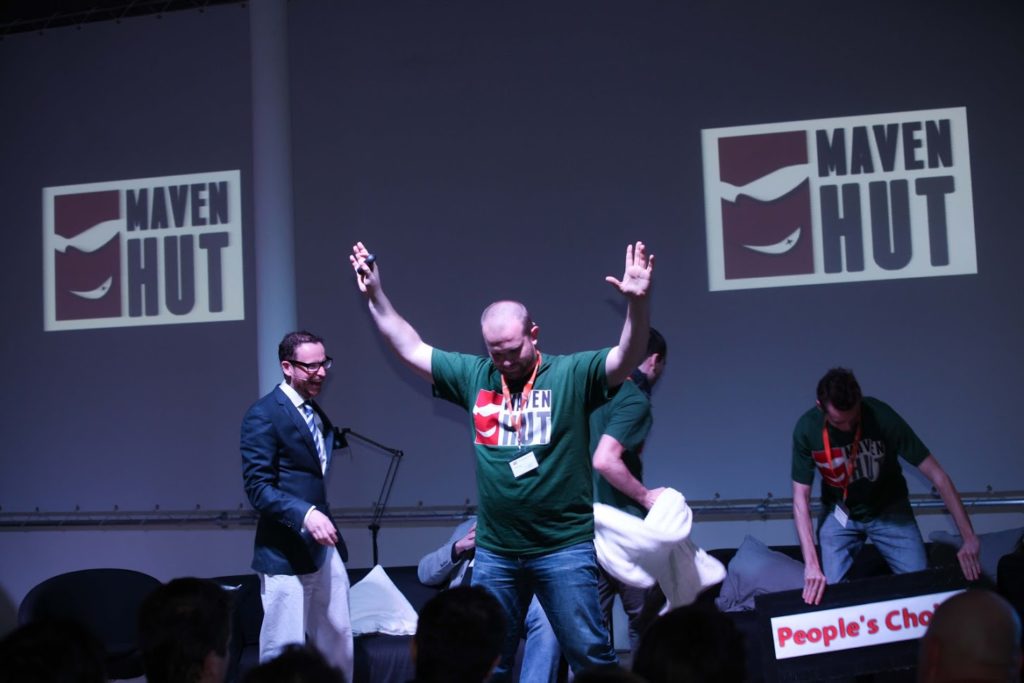
Photo: MavenHut’s founder team, including me, on the stage for Startup Bootcamp Dublin Investor Day, 2012.

Personal Health and Fitness as a Business

ENîn engleză Misc, Startup Founder · July 4, 2017

I’ve been up and down in weight a lot in the last 5 years. The lower limit was 96kgs at some point, the upper one was 115kgs. If the start would’ve been 115kgs and the end, today, 96kgs, I’d be happy. But it wasn’t like this.

In November 2012 I was 97. In May 2013, 109kgs. In January 2014, 96kgs. In July 2014, 112kgs. And it continued with the ups and downs until now, when I’m 112kgs. Again. Not good.

So I’m trying a new approach: I’m looking at my personal health and fitness as I look at a business. Because I’m good enough at business, I should be able to put together a more coherent effort if I think in terms of budgets, resources and expected results.

First step:

Defined my targets. Both in terms of KPIs and expected time to execute on them. Obviously, I have the ideal version and the “I’m ok with” version. The ideal is 90kgs in 12 months. The “I’m ok with” version is 100kgs in 12 months. Everything while building a process that keeps my in shape for the longer term. I’ve lost 20kgs in 6 months previously. It wasn’t sustainable. It wasn’t a marathon, but a sprint, unfortunately.

Second step:

I set the time I allocate to this effort. While I usually go full throttle in every business I start, this time I can’t really do the same. If you want to become a nutrition specialist or a trainer, I can understand your 8-10-12 hours/day focus. I want something else in life, so I need to be able to do everything around my health/fitness in up to 2 hours a day the most (on average). Including cooking and exercise.

Third step:

I look at all the things I don’t know about health and I don’t want to spend time learning. And I looked for people to help me with it. I want my focus to be on executing, for the moment, not on learning new skills. This is why I looked for a personal trainer and a nutritionist. Luck would have it that I found both in one person (at least for the moment). The next specialist might be a cook. I hate cooking. Yeah, I do. Though, for the moment, I’ll do it. Maybe I’ll enjoy it, at some point. Last week was full of bland food, though. Just saying.

Fourth step:

I established a budget for the next 12 months. I made it big enough so that I can test lots of things if I want to, but I didn’t make it too big so that I become less resourceful. When you have too much money, as a business, you end up throwing money at problems instead of actually looking for a long term process as a solution. I’d probably do the same thing now if I put more money to it (I still think about hiring a cook full time). Still, there’s enough money in the budget to make it a good investment. And, when it pays off, it will be the best investment I’ll ever make.

Fifth step:

Stopped falling victim to the “shiny object syndrome”. It’s surprising that I can usually control this when it comes to business, but I’ve never been able to do it in my personal life (with some exceptions). As such, I will keep at the personal trainer/nutritionist route for the next 6 months, at least. While all those other diets (slow carb, low carb, keto and so on) work for others, they didn’t work for me. Yes, I lost kilograms (a lot), but I didn’t manage to create a habit out of it so I put them back.

Sixth step:

I’ll take one step at a time towards getting good habits. Right now I’m working on going to the gym every day 4 times a week, no excuses, while also cooking my own food. I didn’t really cook my own food for the last 15 years, so it’s not gonna be easy. But I need to because every time I tried to create a habit out of eating better I quit because it took too long to get healthy food.

Don’t think I cook 10 courses meals. Just simple things like eggs, salads, different ways to cook meat (I started to enjoy steamed hake a lot). I also look at things I can change in my diet based on my different locations during the day. I try to make it as simple as possible, so I have a small number of choices to choose from. In time, I’ll add more, but I want to have a basic baseline I know I can come back to every time when things get hectic.

Conclusion:

That was my thinking at the beginning of June. I executed the plan and now I have a gym in Cork I go to 4 times a week, a personal trainer that’s also a nutritionist, and I’ve started to cook fish and vegetables.

One thing: nobody actually tells you how the kitchen looks like after “cooking”. Fuck me, the first time I tried I used like 12 plates, 5 bowls, 3 steamer pans, 1 oven… What. The. Hell?

I’m now about 2 weeks in the program and it’s still difficult. I cut down the time to cook food to about 1-1:30h/day. I can go through preparing everything for my meals in just 30 minutes for the entire day, if I use simpler ingredients – like replace the protein from meat with low fat cottage cheese or an egg white omelet. Exercise is also a little bit more difficult, so I need just a hair more convincing that I want to put myself through “torture”. Overall, though, I’m feeling excited, I want to put in the time, I want to move forward.

This is it. I’ll probably update you from time to time to how my new “business” works, so stick around.

——-

The photo is a skating ring in New York. Even though it was really cold, people found the time to have fun and, yes, exercise. I should pay more attention.

Be There and Execute the Plan Every Day

ENîn engleză Entrepreneurship · July 1, 2017

Gelato Dondoli

One question that I get often from newly startup founders is “How do I set my KPIs? How do I know how much money should I make? How do I know how many visitsI should have?”

The answer, this early, is only one: be there every day. The KPIs should be initially related to your execution, not the results. Of course, you will improve, but focus on just doing the thing that needs to be done every day.

How do you get investors to invest?

Well, how about talking to a potential investor every day? Yes, that might mean a 30 minutes talk with a friend you know or a 10 hours search for a contact to get to a person that could invest in you. It’s the same result, though: you got to talk to one person. It doesn’t matter the time it took, that was your KPI: talk to one potential investor every day. As time goes by, you’ll get better at getting contacts, getting better pitches and so on. And it wouldn’t happen if you didn’t talk to so many people until then.

How do I get people to join my startup?

Well, why don’t you try to convince a person every day? Of course, you can learn from each interaction and get a co-founder/employee fast or you could do a half-assed effort and it might take 3 years. Still, by doing it every day, you’ll get better.

How do I get better at blogging? How do I get better at vlogging?

Create a video every day and publish it. Write 500 words every day and publish it. Even if you execute on the plan every day, but you don’t expose yourself to critics and failure, you will not move forward.

That’s it! It is that easy.

Once you do your main job every day, improving on the side things will be easier. It’s easier to get a bigger audience and promote your blog/vlog if you are already creating every day and improving. It’s easier to get someone to join your startup if you already know the answers to their potential questions. And, of course, you will get someone to invest in you once you improve your product, your pitch and your business. But you can’t do anything if you aren’t there every day, honing your skills.

I started going to the gym recently. And Miruna asked what my target is for the 3 months of the program. My answer? I just want to get to the gym every day (it’s a 4 days a week program) and respect the nutrition plan they gave me. I don’t care about anything else. I just want to get back in the habit of exercising and eating well. After that… we’ll see. For the moment, I don’t care about anything else other than being there and executing on it every day.

Oh, what if I fail to appear one day? I continue with the initial plan the next day. Again, and again, until I get it right.
————
The photo from the article is the gelato I’m gonna have once the 3 months are over. Just one. For 3 months. Because I need it! :))

The gelato is from Dondoli’s Gelateria in San Gimignano and, genuinely, it’s one of the best gelatos I’ve ever eaten (and I tested lots of icecream and gelato lately :D )

Despre

Scriu. Fara un subiect anume, fara o tema anume.

Aici e o arhiva a perioadei 2005-2013, cand scriam ceva mai des pe blog.

Scrise recent

  • Logo-ul Blanket
  • Elogiu pentru o tastatura: Thinkpad T480
  • Cartile din 2025
  • Bucuria de a fi iritat (si, probabil, iritant)
  • Cum sa iti dai seama la ce esti bun(a)

Proiecte

  • BobbyVoicu.com
  • MixRift

Copyright © 2026 · BobbyVoicu.ro