• Sari la conținut

BobbyVoicu.ro

  • Home
  • Arhiva (2005-2013)
  • Home
  • Arhiva (2005-2013)

Arhiva completă

  • Toate
  • Română
  • English

Another 30 Days Challenge Down

ENîn engleză Misc · October 9, 2013

cola-30-days-challenge

This is the first day since I started daily on the blog when, honestly, I had no desire to write. I am kinda tired, a combination of waking earlier than I’m used to and a lot of work at the office, so all I wanted to do was lie down and sleep.

Anyway, this didn’t happen and I have to thank the frame of mind set by the 30 days challenges I set myself every month. I’ve written a little bit more about it a month ago.

After 30 days of writing daily (which is proving to be 2 month now), the second 30 days challenge was to not drink any kind of Cola drink because they keep me up at night. Well, I am glad to be able to say that I’ve done it :)

It’s been 30 days since I’ve drank my last glass of Coca Cola Zero. And, man, was it hard. Especially in the first 2 weeks. But now I am ok with it and look forward for my next challenge.

The thing is I’ve started my third challenge while the other one was still running: I’ve decided that every morning shower would be a cold one. The advantages behind it can be found here or here, but I am also ahead of the trend, since the people at the Bucharest town hall announced that we might not get hot water during the night (communism more?). The most important gain for me is that I am not cold in the mornings anymore (I am actually quite alright).

I have one more challenge running right now, but that is still in its first 2 weeks, so I will talk about it a little bit later.

Still, I have to say that for me, the concept of 30 days challenge works. And it’s great.

Photo from Shutterstock

Could We Study Gaming in School, in Romania?

ENîn engleză Misc · October 10, 2013

gaming-carrer

If you’ve been through Romania recently you’ve probably seen the “We hire!” signs by King (especially in Vama Veche, nice move!). The studio in Bucharest has been in a hiring spree in the last year or so and I assume it’s not really easy to find good people. And it’s not related to King as a company (they are one of the gaming company I really admire), but I think it’s related to the availability of talent in Romania.

While there are some great gaming companies in Romania, I really don’t think there’s enough workforce in the country right now with the right skills, at the right level to be hired in the gaming companies. Anybody that wants to create a team that’s bigger than 10 people has to train juniors at some point to get all the skills it needs (I might be wrong, but this is my feeling as someone deeply involved with the industry for the last year and a half).

And I remember meeting someone at the Hamburg Casual Connect earlier this year that was the Dean of the Gaming studies at a university in Hamburg. I mean, they have a curricular, you can actually choose gaming as a career and use the 4 years of college to get prepared for that.

I wonder, what should be done to do something similar in Romania? I have no idea right now, frankly, but I was thinking about it as I saw that a dental company in Romania (Dentestet) decided to create a school of dental technicians just because they need the skills in their company (link here in Romanian, and translation in English).

MavenHut is still a small company, but we might actually try to do this in the years to follow: create our own courses just to train new possible hires (you see the plans for MavenHut, right? :D ).

On the other hand, why wouldn’t art universities had a course of gaming art? Or the tech universities have a course of gaming programming? Or, even more surprising, economics universities should have gaming project management courses (and every studio head in Romania cringes right now).

I am not proposing something (at least not yet), as it’s something I was thinking about and I wish I knew what your opinion on the subject is.

Later edit: apparently, “the Ion Mincu Architecture University in Bucharest has a course on Level Design for several years now”, so it can be done (thanks, Claudiu, for the tip)

Later later edit: a good thing with this post was that I found more on the subject, like the class on Game Design at the Ion Mincu Architecture University.

P.S.: in the meanwhile, later tonight (Thursday, October 10th) you can attend a great panel on indie game at TechHub (how to create them, how to promote them, what results can you expect aso). Maybe these meetups are the seeds we need to get to the Gaming University of Romania. I would love to attend some classes there :D

Photo from Shutterstock

Luck and Work in Game Development

ENîn engleză Misc · October 11, 2013

luck-game-dev

Yesterday I moderated a panel called “Making Games: The Indie Way“. The panel was really interesting and you should watch it here (unfortunately the sound is not the best, being quite low from time to time).

I want to talk about something else. Both members of this panel and members of the Social Gaming panel I moderated some time ago mentioned at some point that they were lucky at some point in their developing games life. And not only once, but several times.

This gives you the impression that developing successful games is a lot of luck, most of the time. Actually, a good friend said that she got the impression building games sounds more like magic than a proper industry.

I just want to tell you that I don’t think luck is that important, though. It doesn’t matter what you do, I just think that luck is just the result of your work, of your efforts and of the opportunities you create for yourself. We were “lucky” to get into Startup Bootcamp, but that is luck only if you take out of the equation all the years before when we build different businesses and games.

Thomas Jefferson said “I am a great believer in luck, and I find the harder I work, the more I have of it.” I totally agree with it.

Photo from Shutterstock

Saturday Video: TED Videos I've Seen Recently

ENîn engleză Saturday Video, Sunday Videos · October 12, 2013

TED__Ideas_worth_spreading-2

I am changing the Sunday Video to Saturday Video. The reasoning behind it is that it gives me more of the weekend to play more games, so I can write about them on Sunday.

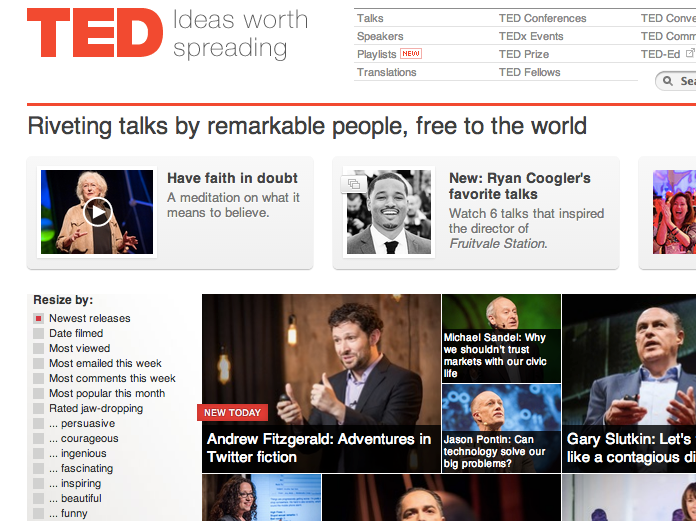
One of the videos in this post is about beauty, about the impact beauty has on young girls, all told by a women that was a model at some point in her life. I found the story entertaining and the ideas behind it genuine.

Another TEDx story I’ve seen is the one of a pickpocket. It’s fun to watch and be careful, this can happen to you (wait for the final minutes to be blown away). I’ve gone back to watch specific sections of the video several times (maybe more than I’ve done this with any other video).

Finally, the last video I’ve seen is about the food we eat. Jamie Olivier has a passionate presentation about food (what else) and obesity. While I am not really interested in the subject, he is entertaining to watch and, by the end of the presentation, you feel you should be interested. It actually had an impact on me, since I decided that I need to lose the weight I gained after 6 months of traveling, eating bad food and eating at weird hours.

I hope you enjoy the newly Saturday Video (ex-Sunday Video) :D

Sunday Game: Gemini Rue (iPad/iPhone)

ENîn engleză Saturday Game, Sunday game · October 13, 2013

Gemini_Rue_Review_-_YouTube-2

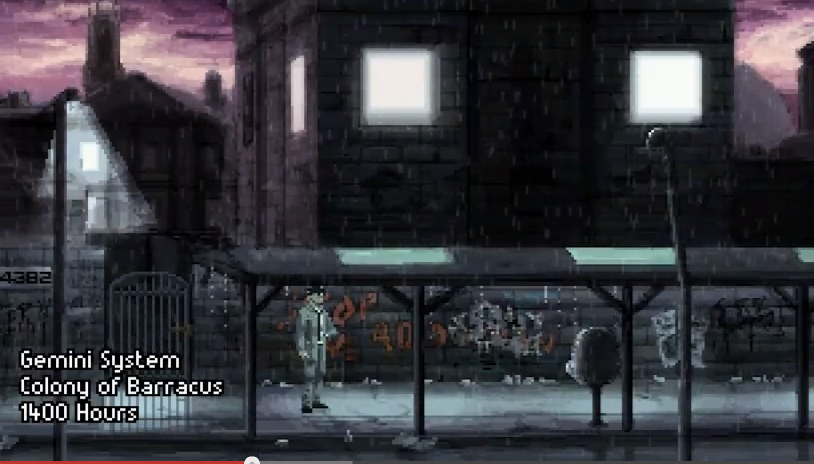
Last week, searching for adventure (quest) games on the iPad, I’ve found Gemini Rue. I enjoy SF games more than fantasy, so it sounded great (especially since I am a big fan of Beneath a Steel Sky:

“A sci-fi noir adventure in the tradition of “Blade Runner” and “Beneath a Steel Sky.”

Azriel Odin, ex-assassin, arrives on the rain-drenched planet of Barracus. When things go horribly wrong, he can only seek help from the very criminals he used to work for.

Meanwhile, across the galaxy, a man called Delta-Six wakes up in a hospital with no memory. Without knowing where to turn or who to trust, he vows to escape before he loses his identity completely.

As fate brings these two closer together, we discover a world where life is cheap, identities are bought and sold, and a quest for redemption can change the fate of a whole galaxy.”

I have downloaded the game last week, played for about an hour, it’s pretty simple for the moment (the puzzles aren’t the most difficult), but I had no time to continue (still, it’s there, on the iPad, waiting for a better moment). The game is an 8bit graphic game, but the graphics is not even at the same level of Broken Sword, so don’t expect too much out of it. The story, though, seems intriguing and interesting, so it should compensate :)

So, if you are a fan of point and click adventures with cyberpunk subject, Gemini Rue might be exactly what you need. The game is $4.99, though, not free, so think about it before dropping the price of a coffee on it :P

The game is also available on steam, for PC, a little bit more expensive (€7,99).

You can see a video review below (not mine):

You Had the Greatest Idea Ever, Now What?

ENîn engleză Startup Founder · October 14, 2013

greatest-idea

I always have brilliant ideas. We all do. Those ideas that “if I would do it, if I had the time” would change the world. Or those ideas that someone else put in practice that I had before they did. I used to have these ideas and felt cheated by fate every time someone else did something similar. Because “I knew!” that it’s gonna work.

There are lots of reasons this way of thinking is wrong, but I am gonna focus on the more palpable things: what do you do to put your idea into reality?

I am often talking to students, people that want to be entrepreneurs, and it seems like going from idea to project is really difficult. And it’s not because they don’t do something about it, it’s just they’re going at it completely randomly and it’s like playing a lottery: you might get lucky.

In IT especially, the cost of having an idea and starting something is not that big: you think that a site about butterflies would be great, right? I mean, who doesn’t like butterflies? And it costs you $10 bucks for a domain name, about $10 for first month’s hosting, about a week of your time to write some articles and here it is, your site about butterflies is up and running, waiting for people to come read it. But of course, they don’t. Because people don’t really care about butterflies.

Next, you look around you and you see a need: you see that people’s life would be better if they had something. What do you do? You start building the solution to it. As you KNOW it should be done. It doesn’t matter that someone else does it better: you are gonna build a better Facebook. Because “people hate that blue f@#$ing color, and my site will be red, the color of passion”. And it still doesn’t work, because people still go to Facebook, since that’s where their friends are.

THe thing is, most of us never take the time to find out what people have to say. What the intended target really needs.

And this is the next step after having the idea:

Before doing anything to put it into practice, find out who needs what you offer, talk to them in person. Find 200 people that would use your site and, if possible, make them pay just for the idea. Get somebody to pay you for something you want to build.

The thing is, most of the time what you find out is completely different. You will see a lot of new opportunities in the same field. You will understand that people don’t care about butterflies, but that farmers hate bugs eating their crops. And find a solution for that.

Next time you have a brilliant idea, then, do these steps:

– go back to sleep
– if, when you wake up, the idea is still sound, understand who your users are
– spend time finding those users in real life and talk to them: ask them what they need and how can your solution be better (your users aren’t your friends, your parents and your co-workers, usually, so do not fool yourself)
– when you have enough interest, go for it.

You will go out of your comfort zone calling people out of the blue to ask them what they need. You’ll get over it.

Later edit: I actually wrote an article about how we’ve done this testing at Mavenhut. You can read it here.

Photo from Shutterstock

P.S.: If you think you can be Steve Jobs and just show people what they need, you don’t need this article. Sorry for wasting 5 minutes of your life. Now the next iPhone will never be invented, and I’m the one to blame.

Indie Gaming Reading List

ENîn engleză Game Development · October 15, 2013

indie-games-reading-list

I’ve been reading a lot about indie gaming lately (obviously) and I’ve found some interesting articles that might spread some light for people just starting in gaming or just interested about the space.

1. The Indie Revolution: How little games are making big money

It’s an overview article of the indie gaming scene, with interesting links going from it to other interesting articles (I started with it and I have a full browser window with lots of tabs opened, still waiting for me to read them)

2. Beat Hazard Grosses $2 Million – Sales Comparison

The guy that created Beat Hazard talks about the revenue he’s created in the last several years with his Beat Hazard game, It includes graphs, sources analysis (Steam, mobile, XBox, PS3), it’s a pretty compelling article.

3. Ask me any question with Steve, the creator of Beat Hazard

A follow up of the previous article, this is a great thread on indie gaming, on what it means, how to start, what to do and so on. It’s gonna take you a little while, so put an hour, at least, to read it.

4. The Myths about XBox Live Indie Game Development

The guy writing this article is the creator of the highly successful indie franchise Castle Miner, that sold over 1.5 Million units in XBLIG. Another great article, that allows you to get an idea what it means to create successful indie games.

This is kinda it. Now you’ve got a lot on your hands, start reading :D

Photo from Shutterstock

LinkedIn Pitch Deck, Explained by Reid Hoffman

ENîn engleză Startup Founder · October 15, 2013

Slide01

Reid Hoffman, the founder of LinkedIn, pitched with this specific deck to raise money from Greylock.

He explains in depth the context and he gives great advice on each slide of the deck.

It’s great resource and a great f#@$ing idea, which I would love to be done by more entrepreneurs. ANy startup founder should read this article. I know startup founders rarely raise B rounds, but this doesn’t make the process less relevant.

I normally write one article per day, but this is one resource I want to be able to find when I need it.

Financing for an Idea: Get Your First Prototype

ENîn engleză Startup Founder · October 16, 2013

financing-idea

I got a question in the email yesterday related to the article about next steps after the idea he asked where could he get financing for a first prototype.

The thing is, if you do not have a great background nobody will finance you just because you had an idea. Having an idea is not that difficult, putting it into practice and executing is what differentiates winners from losers.

So, what do you do, though? Well, the best option is family, friends and fools, or the 3F’s, as they are called.

The reasoning behind it? If you are not capable of selling an idea to people that know and trust you, you have a big problem: either the idea is bad or you are incapable of selling it. Usually it’s the second case, because an idea is not inherently bad (well, within reason), it’s the execution that sucks.

There is a silver lining in all of this: you can get better if it’s your fault. You can talk to as many people as possible, understand your own plan better (do you really need money or resources?). If you need resources, maybe you can get a developer and a graphic designer to believe in the same idea and, all of a sudden, you have several thousand dollars worth of resources available every month.

Another option is to self fund. We’ve done this at MavenHut for the first 9 months (yes, we got €12,000 from Startup Bootcamp, but we spent all of it in those months of staying in Dublin). It wasn’t easy, but we thought it was worth it. The thing is, though, that we assumed that if it doesn’t work we will lose the money, so see if you are prepared for such a commitment.

What you can do, then, is to get a job and work on your idea in the evenings. It makes for a difficult period of time, your social life might suffer, but hey, it’s your idea and your dream!

You have to take into consideration something, though: things do not happen fast. No matter what, it will probably take years to see your first prototype. If you are not willing to put the effort in, it might not be for you.

And, on the bombshell, to quote Top Gear, what are you waiting for? Go build that prototype. It’s not gonna be easy and it’s not gonna happen on its own :)

P.S.: I actually know of a case where a guy learned to program enough on his own that he was capable to create a prototype (ugly and bad), but it was enough to get an angel investment. So, there are options you can consider.

Photo by Jimmy Smith

2 Tips to Get You Into Accelerator Admission and Startup Competitions

ENîn engleză Startup Founder · October 17, 2013

2013-10-17 20.07.27

In the past two years, the ones that are closely connected to MavenHut, I’ve applied to different competitions and accelerators (ok, one accelerator) and I’ve got accepted to almost all of them (I think I’ve only missed Web Summit in London in 2012, when the company was still young and I didn’t have too much to say about it).

Among the ones that accepted us were Startup Bootcamp Dublin, Enterprise Ireland Competitive Startup Fund, Venture Connect (Bucharest), How to Web Startup Spotlight (Bucharest), Global Technology Symposium (Silicon Valley), Best Startup in Romania, Best Co-founder in Romania. There are some more, but these are the most important ones.

As you can see above, I’ve set myself as quite the expert :)) There are some competitions there. But it could’ve been so many more, since there are so many startup competitions right now (in Europe, at least).

First tip: choose your battles.

I never try to compete somewhere unless I have a really good reason: become more visible in a target market, get investors, start the product. This means I analyze every competition there is, who comes there, what is the impact in the areas of interest for me and then I decide. Most of the times against participating, because it takes a lot of time to fill in everything.

Second tip: Take your time filling in the forms

This is by far the best tip I could think of. It takes me (even now) 2-3 days at least to complete a form. I write the informations again and again, in a note in Evernote, until I get the best form possible. I use as few words as possible, put the exact information requested, nothing more, and I really emphasize what makes us different. I talk to people, I let them read what I wrote, see if they understand what I try to say…

While the information that you put in is important, the form might actually be more important. The jurors have to go through tens or hundreds of applications, so make their job as easy as possible.

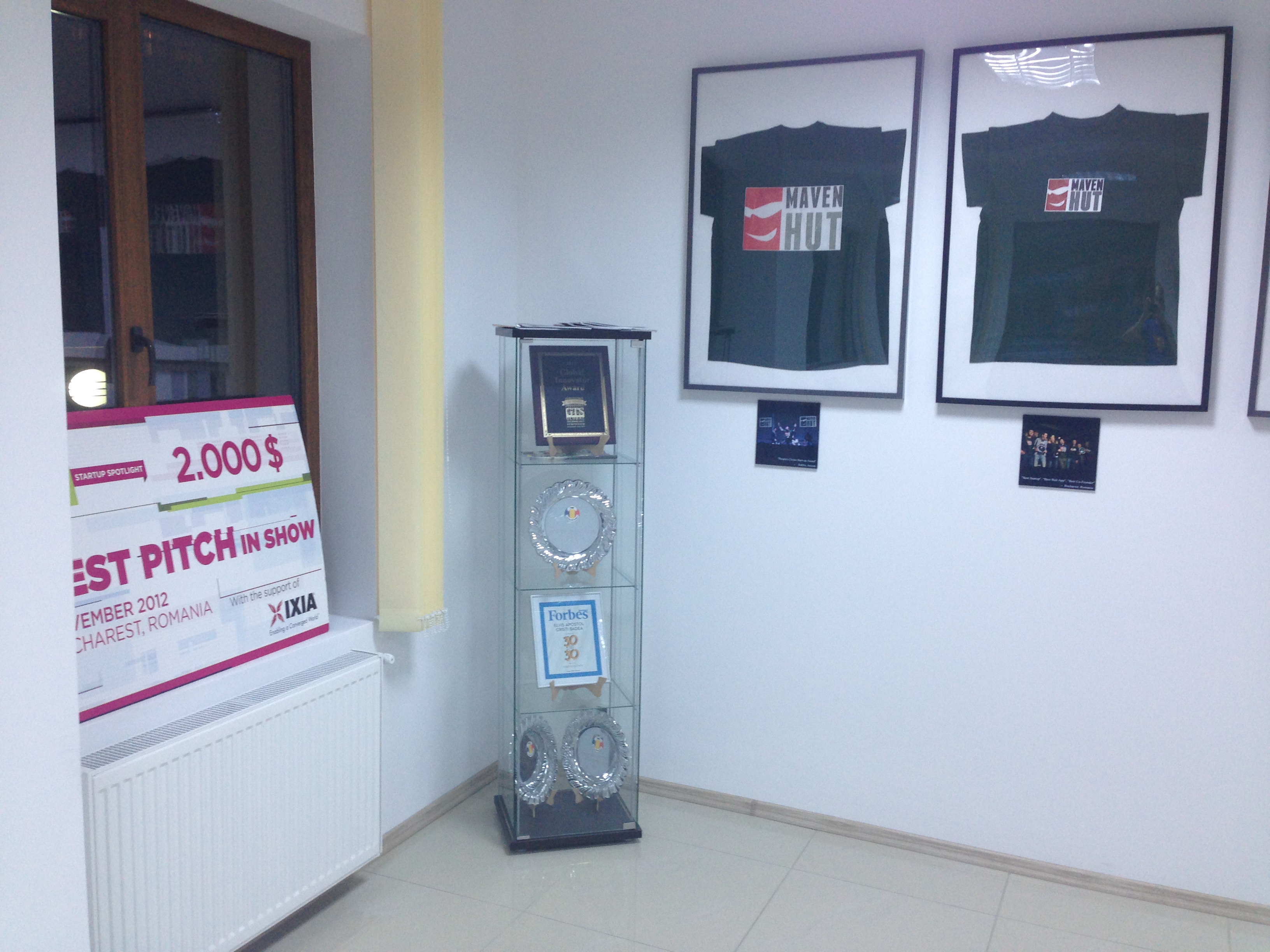
That’s it! I got the idea to write about this from a friend of mine that asked me about 2 months ago how I’ve done it and I remembered to write because I saw that Startup Spotlight is closing its doors at the end of this week. MavenHut won Best Pitch last year at Startup Spotlight and it was a good experience for us (talked to a lot of like-minded people, met a lot of investors). So take 2 days and fill in their form. And do it well :)

P.S.: the photo above is our “Proud Corner”, with the prizes we took and the t-shirts worn during different important moments in our company’s life :) Later update: Yes, we know it should be “Corner of Pride”, but our corner is really proud of us, ok? :))

  • « Previous Page
  • Pagina 1
  • …
  • Pagina 150
  • Pagina 151
  • Pagina 152
  • Pagina 153
  • Pagina 154
  • …
  • Pagina 185
  • Next Page »

Despre

Scriu. Fara un subiect anume, fara o tema anume.

Aici e o arhiva a perioadei 2005-2013, cand scriam ceva mai des pe blog.

Scrise recent

  • Logo-ul Blanket
  • Elogiu pentru o tastatura: Thinkpad T480
  • Cartile din 2025
  • Bucuria de a fi iritat (si, probabil, iritant)
  • Cum sa iti dai seama la ce esti bun(a)

Proiecte

  • BobbyVoicu.com
  • MixRift

Copyright © 2026 · BobbyVoicu.ro