• Sari la conținut

BobbyVoicu.ro

  • Home
  • Arhiva (2005-2013)
  • Home
  • Arhiva (2005-2013)

Arhiva: 2016

Continuă în arhiva completă

  • Toate
  • Română
  • English

Multiplier Skills and Specific Skills

ENîn engleză Entrepreneurship, Misc · September 16, 2016

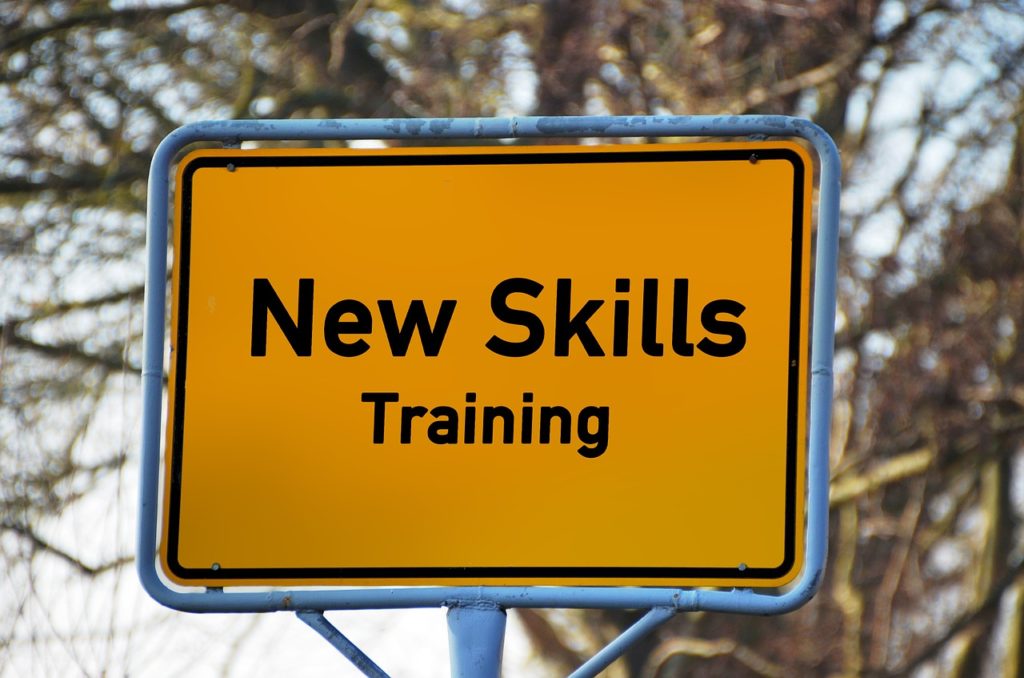
road-sign-798175_1280

“I will never be able to sell something. I am the artist, I create things, I don’t sell them to the buyers at a fair. Sales people should sell, not me!”. This is what my fiance was telling me the other day, when she came back from a fair where she sold some of the art she creates. I told her something on the lines of “you should be one of the best sales persons for your own art”, thinking that every buyer wants to engage with the artists they like.

Tell someone to start learning how to sell and you’ll get frowns and “Damn it, Jim, I’m a doctor, not a sales person!” type of responses. Especially if they are a creative person or, God forbid, a coder! This doesn’t change the truth: selling is a skill you should understand and practice.

Selling is, also, a multiplier skill. The multiplier skills take all the specific skills that you have and they make the total bigger and better. I define “specific skill” as a skill that you need to do your job. Drawing is specific for an illustration artist, programming for a coder, accounting for an accountant, you get it.

I got the idea of multiplier skills from Derek Sivers’ Ideas are just a multiplier of execution article (go read it!).

Here is a pyramid of values for specific skills (by “bankability”) and multiplier skills:

AWFUL Multiplier Skills = -1
WEAK Multiplier Skills = 1
SO-SO Multiplier Skills = 5
GOOD Multiplier Skills = 10
GREAT Multiplier Skills = 15
BRILLIANT Multiplier Skills = 20
——– ———
AWFUL Specific Skills = $1
WEAK Specific Skills = $5
SO-SO Specific Skills = $10
GOOD Specific Skills = $50
GREAT Specific Skills = $100
BRILLIANT Spec. Skills = $200

Multiply the two and you get a number showing how successful you are or you can be.

If you are a great coder ($100) with weak multiplier skills (1), you will often see worse programmers being paid a lot better – like a so-so programmer ($10) with great multiplier skills (15).

The same if you are a weak designer with brilliant multiplier skills, you might see yourself getting a lot more for your efforts than your more talented counterparts.

This means that above a specific amount of specific skill (being GOOD), it might be better for you to use 1-2 hours per week to develop multiplier skills instead of trying to become great or brilliant. Of course, there are specific situations when you need a brilliant someone. If you are in that specific situation, the article is not for you. Or maybe it is, you arrogant POS! :)

What are some multiplier skills?

The first multiplier skill I became aware of was writing. I am not thinking of becoming a published author. I am thinking of being able to express your ideas clearly in written form. Writing avoids unnecessary time loss and subsequent misunderstandings. Think about it: writing a two phrases email that explains what you need beats the hell out of 5 paragraphs ones.

Selling, the multiplier skill I talked about at the beginning of the article, is another one. You sell something from the moment you are born. By crying, you sell your need for food. You sell a movie to get a date later in life. You have to sell yourself to be hired. You have to sell a product you create if you are a founder of a company (everybody sells, not only the CEO). If you are a creative person, an artist, you still need to sell what you’re creating. You need to convince your partner, kids, friends, audience, public, readers to listen to your ideas and act on them.

Public speaking is not easy to do. It is also another multiplier skill. Most of the adult people I know would need to be better at addressing groups of people. It’s not only for the entrepreneurs, CEOs or business people. As long as your job means talking to 2 or more people at the same time, it would be a lot easier if you have some public speaking skills and you don’t melt once more than 2 pairs of eyes are focused on you.

These are three multiplier skills I can think of right now. I am sure you can mention some more in the comments below.


Books I Read in the Last 3 Months

ENîn engleză Misc · September 2, 2016

stack-of-books-1001655_1280

This was initially a small list, part of this article. It got longer, so I created a new article, specifically for it.

Following are some of the books I’ve read in the last 3-4 months or so.

Altered Carbon – Richard Morgan
– a “noir like” SciFi detective book

What I Talk About When I talk About Running – Haruki Murakami
– great book on writing and creative process and, obviously, running.

The Rosie Project – Graeme Simsion
– a great, funny, book on the underlinings of relationships. There’s another book, The Rosie Effect, a sequel, that I hated and stopped reading at 30%

Harry Potter and the Cursed Child
– the play continuing the 7 HP books. Interesting, but not as good as the books. I wanted to go and see the play, but it’s fully booked until June 2017, at least – I stopped looking for tickets afterwards. On viagogo, the good seats go for about $3000 for both acts. I am not that much of a fan!

FlashPoints: The Emerging Crisis in Europe – George Friedman
– written in 2012, reading it may feel creepy, because it sees the migrant crisis, the structural issues of EU 2 years before being obvious and it makes you think what else might come true?

The Mandibles: A Family, 2029-2047 – Lionel Shriver
– a post-apocalyptic book on what would happen if the US economy goes to shit. The book is quite static, but the ideas behind it are interesting.

The Simple Path to Wealth – JL Collins
– a financial blogger’s book. His blog is one of the blogs I would recommend to anybody trying to reach financial independence. His Stock series is something I recommend to anybody trying to get the basics of stocks, obviously.

American Gods – Neil Gaiman
– a book everybody recommends when talking about Fantasy must read. It’s interesting, but I didn’t like it that much, though it makes you take an fascinating trip through the US.

Uncharted – The Fourth Labyrinth
– yeap, I really like the Uncharted gaming series, so I also read the book. It’s similar to the games, so go and read it if you liked them.

Anything You Want – Derek Sivers
– I love his blog, so it was obviously I would buy his book. Great book on entrepreneurship and business building. He’s built his business without VC funding, so have that in mind when reading it.

The Truth – Neil Strauss
– I didn’t like it. The guy that wrote The Game is back with a book about his discovery of a real relationship. But I think that this was just a reason to try everything possible about sex (from swinging to open relationships). It’s fascinating this way, but I just feel like all he wants is to brag. It might be different for you. The Game was a lot more interesting, talking more about social patterns and behaviours.

Disrupted: My Misdventure in Startup Bubble – Dan Lyons
– the guy that used to be Fake Steve Jobs and is now a writer for the Silicon Valley TV Series tells the story of his life in a startup. HubSpot, specifically. He exaggerates the bad things and he ignores the good ones, I think. It’s interesting to see how people outside the startup ecosystem see this world, though.

Total Recall: My Unbelievable Life Story – Arnold Schwarzenegger
– a surprisingly good book on business, motivation and life. Great, great, great read. Couldn’t recommend it enough.

In Europe’s Shadow: Two Cold Wars and a Thirty-Year Journey Through Romania and Beyond – Robert Kaplan
– a good book on Romania and the neighbouring countries, from late 70s to today, written by an outsider. It gives you a good understanding of the geopolitics of the last 30-40 years in this part of the world.

The link above are Amazon affiliate links, so you are supporting my reading habit with it. Just so you know. Also, since I read mostly Kindle books, these are the versions I link to. You can find hardcover/paper books there, as well.

Experimenting

ENîn engleză Entrepreneurship, Misc · August 31, 2016

flash-113310_1280 (1)

I’ve always read a lot since I was about 5 and I learned how to read. The thing is, building MavenHut took a lot of time and I’ve stopped reading as much as I used to. So I decided recently to read more.

Reading books gives me a lot of ideas. And the worst thing I can do is not do anything with them. So I need to start experimenting those ideas somehow. I don’t know how, yet, so this is an issue. But now I understand my need. I suppose the solution will appear at the right time.

By the way, I am not talking about business books. While they do give me great ideas, some of the best ideas come from fiction. Especially SciFi.

In case you’re wondering, I am writing an article now on the books I’ve read recently. So you might want to come back in several days.

English as an efficiency tool

ENîn engleză Misc · August 11, 2016

english-as-an-efficiency-tool

I’m writing a longer article right now for the blog and I kept asking myself why I write in English and not in Romanian, my native language. It would be a lot easier to express ideas, after all, right?

Well, it might be easier, but I think that English forces me to be more efficient when I communicate. If you don’t think it’s efficient, think what it would be like in Romanian :)

The truth is that I don’t have such an extensive vocabulary in English. It forces me to express ideas in simpler words. I need to use less words, as well. It is a pain in the ass (watch that language, mister!), but I feel it’s easier for me to communicate ideas this way.

Of course, there is also the arrogance of believing that a global audience has nothing better to do than reading what I write. But that’s not me, no, no! I am just doing this as an exercise in efficiency.

Missing curiosity

ENîn engleză Misc · August 9, 2016

bobby-voicu-radiolynx

I’ve been a curious kid. As most children are, I’m sure. The thing is I managed to continue being curious throughout adulthood. And I don’t mean being curious about my job or my personal hobbies and interests. I was always genuinely curious about what other people considered interesting, how they overcame difficulties, how they built their success. I remember reading somewhere that everyone is interesting because they managed to survive this long. I’m not THAT curious to talk to everybody, but still, I think we all have something interesting to say, for the right person.

I think this is what made me start a radio show about IT entrepreneurship 10 years ago for what was the first online radio in Romania, RadioLynx. They took a chance on me and I need to thank them for it.

The radio shows, 6 years of them, about 20-30 per year, opened my eyes to a lot of things. From someone talking to us about internet related laws in Romania to a TV news anchor discovering the fun of writing on his own blog, from lifestyle business to VC-supported startups, from multi-million international companies to local ones, I’ve had a lot of guests on the show. And I learned so much from them and from our audience.

Back to the present, though :)

Right now I am on a much needed longer vacation, so I had a little bit of time to think about things while Cristi and Elvis work hard. Yeah, driving around Europe, as I am doing now, gives you a lot of time for reflection.

I understood that in the last 4-5 years I focused a lot on being curious about what I was doing, mainly building games and growing MavenHut. This meant that I wasn’t that curious about other people’s projects and ideas unless they were directly related to what I was doing. I feel that I am missing a lot because the best ideas I’ve ever had were interdisciplinary, coming from areas I wouldn’t expect. After all, one of the good ideas implemented at MavenHut, the Solitaire tournaments, came from me and Cristi’s playing poker online in Multi Table Tournaments.

I just found out that I miss talking to people that do different things than I do. If you didn’t listen to Tom Ferriss’s podcast, give it a try. He talks to guests from actors like Jamie Foxx to entrepreneurs like Matt Mullenweg or special forces people and the interviews are really insightful. These interviews are, probably, one of the reasons I realized I was missing being curious and asking questions about things I had no ideas, where I felt I could learn a lot.

There’s no conclusion to this article.

Just that, if you get an email from me to meet and you think we have nothing to talk about, you might be right. On the other hand, I have some stories to tell, as well…

Games to Play

ENîn engleză Misc · May 18, 2016

Just a list of games I want to play when I’ll have the time, so I don’t forget about them:

2017

Tacoma
Torment: Tides of Numenera

2016

Life is Strange
Her Story (played)
Adr1ft
Heavy Rain Remastered
No Man’s Sky (i don’t think I’ll play it, after all)
Sherlock Holmes: The Devil’s Daughter: review
Stardew Valley (playing it, not getting it yet)
Dwarf Fortress (quite difficult, I don’t have the time to play it)
Coloratura (I’m not ready to play a text adventure yet)
Planescape: Torment (I got the Enhanced Edition recently)
Offworld Trading Company: review
Stellaris: review

Search for them if you want links :)

On Quantity vs. Quality

ENîn engleză Entrepreneurship, Misc · January 2, 2016

“The ceramics teacher announced on opening day that he was dividing the class into two groups. All those on the left side of the studio, he said, would be graded solely on the quantity of work they produced, all those on the right solely on its quality.

His procedure was simple: on the final day of class he would bring in his bathroom scales and weigh the work of the “quantity” group: fifty pound of pots rated an “A”, forty pounds a “B”, and so on. Those being graded on “quality”, however, needed to produce only one pot – albeit a perfect one – to get an “A”.

Well, came grading time and a curious fact emerged: the works of highest quality were all produced by the group being graded for quantity. It seems that while the “quantity” group was busily churning out piles of work – and learning from their mistakes – the “quality” group had sat theorizing about perfection, and in the end had little more to show for their efforts than grandiose theories and a pile of dead clay.”

From Art and Fear, via Stratchery -> Why BuzzFeed is the Most Important News Organization in the World

Despre

Scriu. Fara un subiect anume, fara o tema anume.

Aici e o arhiva a perioadei 2005-2013, cand scriam ceva mai des pe blog.

Scrise recent

  • Logo-ul Blanket
  • Elogiu pentru o tastatura: Thinkpad T480
  • Cartile din 2025
  • Bucuria de a fi iritat (si, probabil, iritant)
  • Cum sa iti dai seama la ce esti bun(a)

Proiecte

  • BobbyVoicu.com
  • MixRift

Copyright © 2026 · BobbyVoicu.ro